
[ad_1]
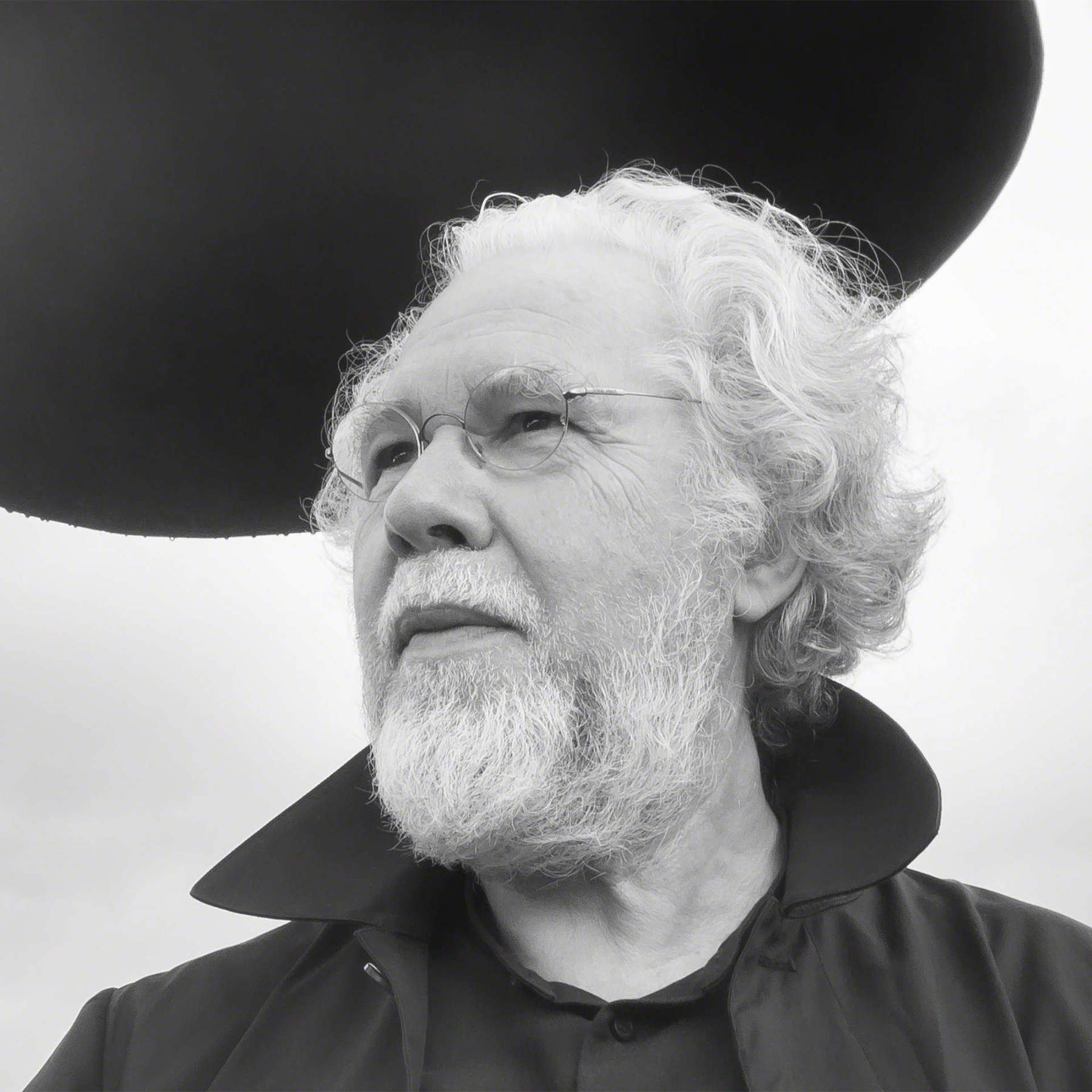
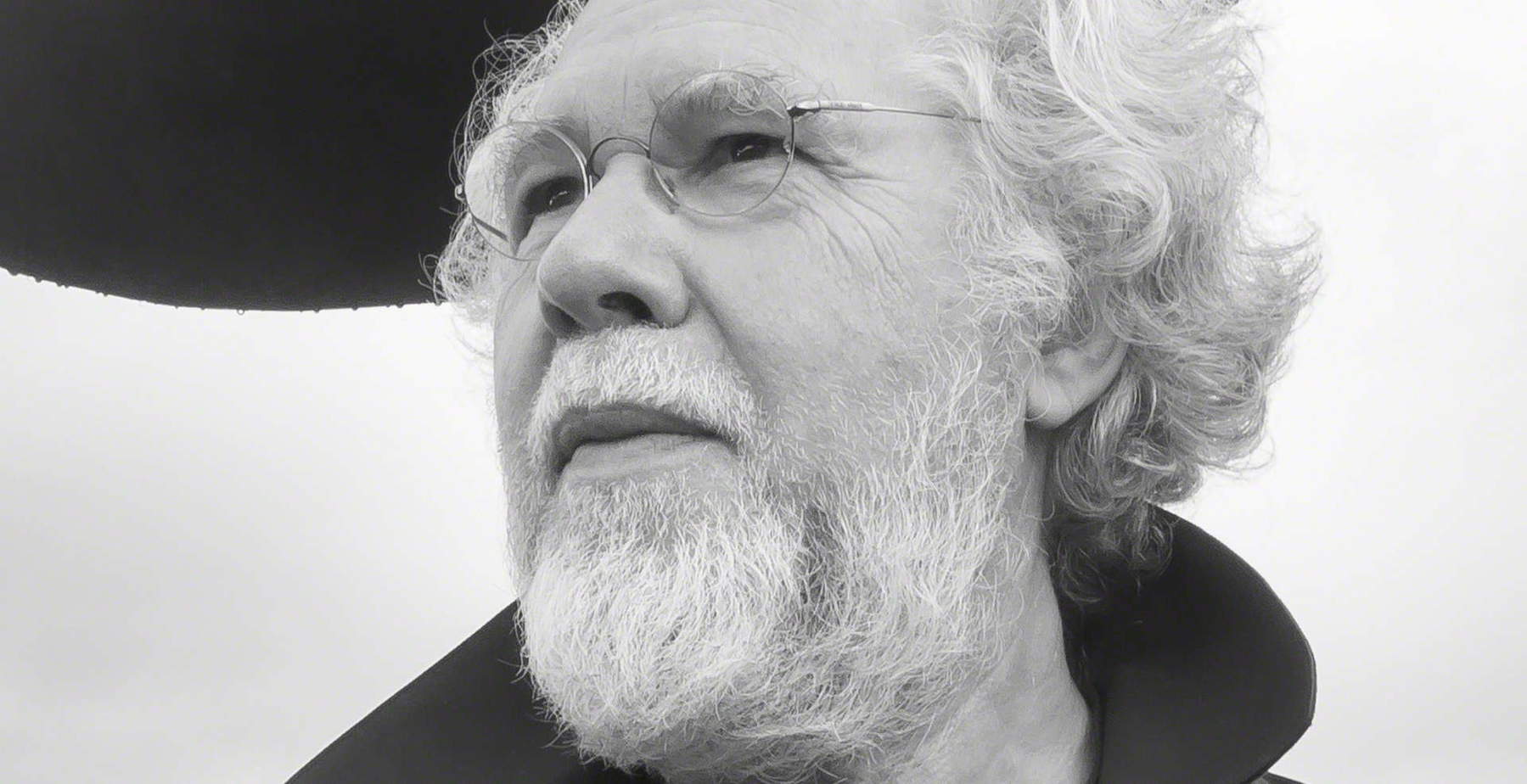
Remo Salvadori, among the most important contemporary Italian artists, has passed away at age 79. A central figure between sculpture and installation, he participated in the Venice Biennale and Documenta and developed a language between matter, space and spiritual dimension.
Remo Salvadori, among the most relevant and recognized figures in Italian and European contemporary art, passed away today at the age of 79. His passing brings to a close the human and artistic career of an artist who, starting in the 1970s, contributed to redefining the language of sculpture and installation, building a coherent and highly recognizable path focused on the relationship between matter, space and perception. Born in 1947 in Cerreto Guidi, Tuscany, Salvadori had moved to Milan in 1972 after completing his studies at the Academy of Fine Arts in Florence, a city from which he had distanced himself in order to pursue an autonomous path of research. Milan would become his adopted city and the main laboratory of his artistic activity, a place where he lived and worked for more than fifty years.
From the beginning, his research has been located in a borderline territory between sculpture, installation and site-specific intervention, developing a language that, while dialoguing with the Arte Povera experience, has gradually broadened its perspectives toward a more intimate, conceptual and spiritual dimension. At the center of his work are primary elements such as water, color, metals and everyday objects, used as tools to investigate perception and the relationship between observer and work.
His practice has been built around an idea of space understood not only as a physical container, but as an energy field and place of transformation. In this context, the work becomes a device of experience, a threshold through which the viewer is called to enter into relationship with himself and the environment. Salvadori has often described his work as a process of awareness, a journey involving mind, body and sensibility in an almost ascending dimension of perception.
His debut came in the 1970s with a series of solo exhibitions hosted by galleries that made their mark on the Italian contemporary art scene, including Franz Paludetto in 1971, Franco Toselli in 1973, Lucrezia de Domizio in 1976 and 1979, Paolo Marinucci and Tucci Russo in 1976, Lucio Amelio in 1978, and Paola Betti in the same year. In these contexts he gradually defined a language that intertwined objects, materials and spaces in a continuous redefinition of the concept of the work.
His career soon developed on an international scale. Salvadori participated in several editions of the Venice Biennale, in 1982, 1986 and 1993, and in Documenta in Kassel in 1982 and 1992, two of the most important events in world contemporary art. His presence in these venues consolidates the critical recognition of his research, placing him firmly in the European debate.
Throughout the 1980s and 1990s he took part in numerous group exhibitions of international importance, including The European Iceberg: Creativity in Germany and Italy Today in Toronto in 1985, curated by Germano Celant, Corrispondentie Europa at the Stedelijk Museum in Amsterdam in 1986, Chambres d’Amis in Ghent in the same year, Minimalia. From Giacomo Balla to… between Venice, Rome and New York between 1997 and 1999, to Happiness: A Survival Guide for Art and Life at the Mori Art Museum in 2003 and Terre vulnerabili at HangarBicocca in Milan in 2010.
At the same time, Salvadori has developed an intense exhibition activity with galleries and private spaces, collaborating over time with Salvatore Ala between Milan and New York, Galleria Pieroni in Rome, Locus Solus in Genoa, Christian Stein between Turin and Milan, up to BUILDING in Milan, with which he has maintained an ongoing relationship even in more recent years.
There have also been numerous anthological exhibitions hosted in international institutions, including the Italian Cultural Institute and the Art Gallery of Ontario in Toronto in 1987, the Centre National d’Art Contemporain de Grenoble in 1991, the Centro per l’Arte Contemporanea Luigi Pecci in Prato in 1997, the Fondazione Querini Stampalia in Venice in 2005, and the Stiftung Insel Hombroich in Neuss in 2018.
In 2019 he was awarded the President of the Republic Prize in the sculpture category, a recognition that enshrined the institutional value of his artistic research. More recently, in the summer of 2025, Salvadori was the protagonist of a major retrospective exhibition in Milan, curated by Elena Tettamanti and Antonella Soldaini, articulated between the Palazzo Reale, the Museo del Novecento, and the church of San Gottardo in Corte, which covered the entire span of his production.
His work has developed through a personal grammar based on geometries, reiterations and symbolic relationships, in which elements such as the square and the circle take on cosmic and existential value. Since the early 1970s, the artist has often used photography and common objects to reinterpret philosophical concepts and archetypes related to myth, building a coherent system of cross-references between everyday experience and the spiritual dimension.
In recent years his research has continued to evolve with monumental works such as Germoglio, created between 2023 and 2024 for the MACCA in Peccioli, and Alveare, installed in the same period at the Garden Garden Garden of the Convent of the Church of the Holy Redeemer in Venice, commissioned by the Venice Gardens Foundation.
Salvadori’s artistic thought has also been expressed through numerous volumes and publications, including 1987’s L’attenzione divisa, 1989’s L’ottava, 2004’s Il Cantiere Remo Salvadori, 2005’s L’osservatore non l’oggetto osservato, 2010’s Quaderni Stein, 2012’s Isola, Isole, Insulae, 2016’s L’acqua è maestra, and the 2025 monographic volume published by Skira. His work was characterized by constant reflection on the relationship between interior and exterior, individual perception and reality, form and meaning, in a balance that always sought to overcome oppositions to arrive at a unified vision of aesthetic experience.
With his passing, the art world loses a protagonist who was able to traverse more than fifty years of contemporary history while maintaining a radical coherence and a strong poetic autonomy, contributing decisively to the debate on Italian and international art between the 20th and 21st centuries.
 |
| Farewell to Remo Salvadori, protagonist of Italian contemporary art |

Warning: the translation into English of the original Italian article was created using automatic tools.
We undertake to review all articles, but we do not guarantee the total absence of inaccuracies in the translation due to the program. You can
find the original by clicking on the ITA button. If you find any mistake,please contact us.
[ad_2]
Source link