
[ad_1]
By Manuela Annamaria Accinno May 19th, 2026
In 1978, composer Harold Budd released “The Pavilion of Dreams”, a monumental album produced by Brian Eno that presented itself as a veritable acoustic temple dedicated to the essence of dreams. Deeply inspired by the spiritual tension and transcendental quest of jazz giants like John Coltrane and Pharoah Sanders, Budd’s album did not merely describe the act of dreaming, but established it as a physical and metaphysical space. Through music that floats between mysticism and absolute stillness, the album deliberately blurs the line between wakefulness and sleep, demonstrating that dreaming is not an escape from reality, but a higher form of perception and knowledge.
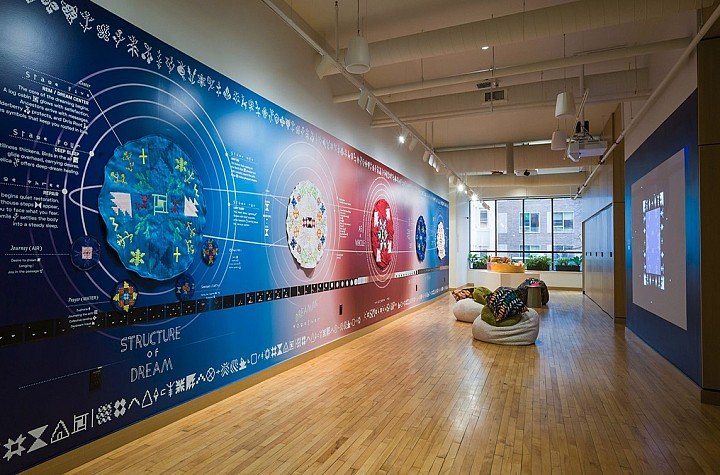
Nearly forty-eight years later, that same need to inhabit “the pavilion of dreams” shifts to the tangible reality of the exhibition space with the exposition “Welcome to Cosmologyscape”, created by artists Kite (Oglála Lakȟóta) and Alisha B. Wormsley, and curated by Abigail Satinsky and Maggie Wong, at Wagner Gallery. There is an invisible yet indestructible thread linking Budd’s mystical stillness to Kite and Wormsley’s multimedia exploration: the idea that the dream is the last bastion of human integrity, a territory removed from the logic of profit and exploitation where it is still possible to conceive of a radically different future. While Budd has translated the dream into sound, the two artists transform it into a communal and intergenerational tool for mapping out an accessible, equitable, and decolonized tomorrow.
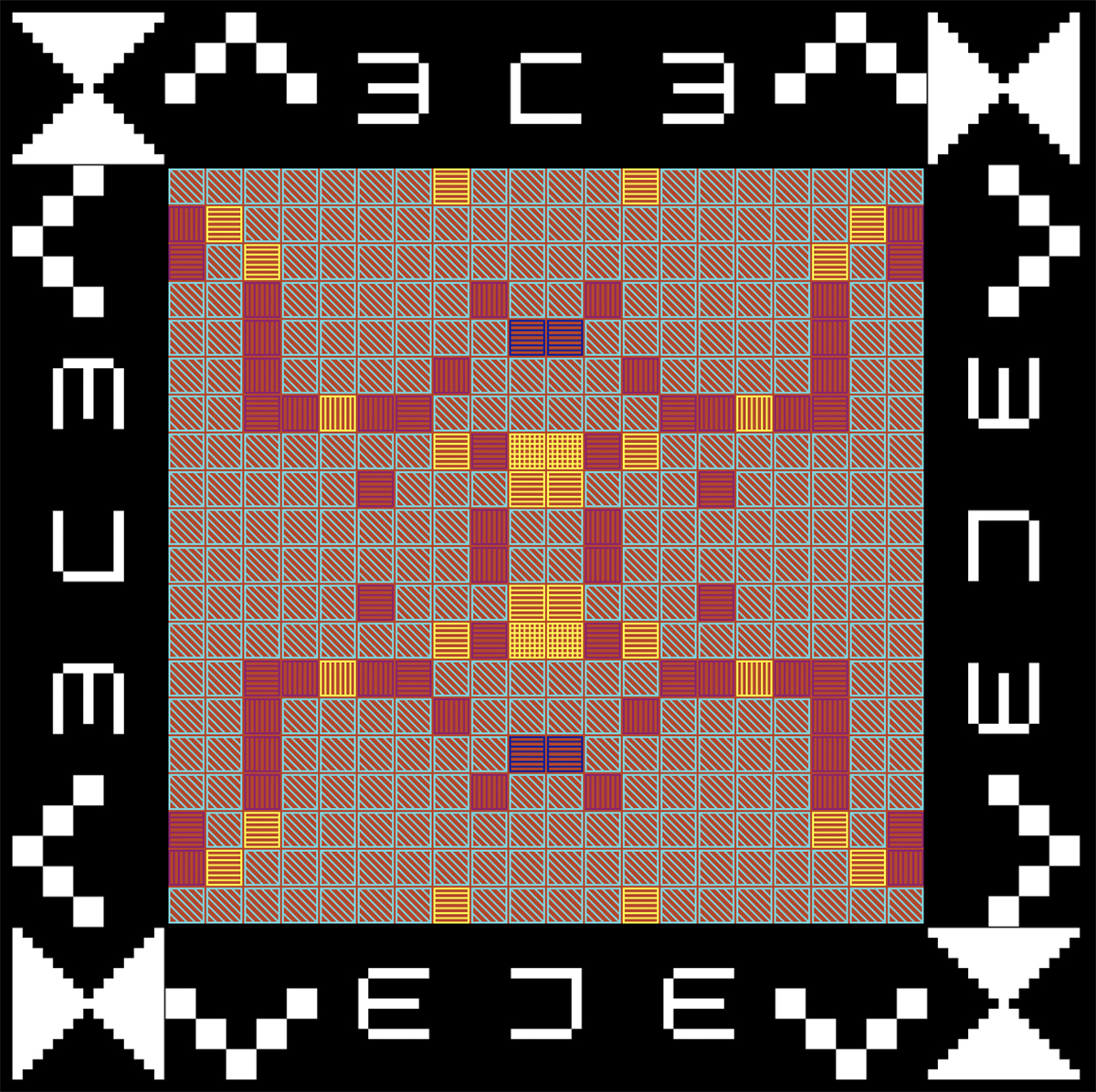 Digital quilt squares generated by the Cosmologyscape dream portal using dreams submitted by individuals from the greater Boston area
In our hyper-connected contemporary world, human time has been progressively colonized by round-the-clock productivity and digital surveillance. In this alienating scenario, the act of dreaming risks being reduced to a mere biological byproduct or a solipsistic escape. Cosmologyscape reverses this drift by restoring to the dream its original ritual and collective dimension, rooted in the gatherings the artists initiated in 2020 with Native and African American communities.
The project does not isolate the dreamer, but welcomes their vision into a polyphonic chorus. Just as in jazz, where individual improvisation expands meaning through other instruments, so in Cosmologyscape the dreams of individual citizens in the Boston area are channeled into a digital portal. This process of “collective dreaming” becomes a political act: asserting the right to rest, imagination, and speculation about the future for those communities—Indigenous and Black—to whom these rights have historically been systematically denied or limited by barriers of race, class, and social status.
The works on display atWagner Gallery, ranging from textiles to digital videos, from experimental furniture to sound installations, are not merely aesthetic artifacts, but tangible testimonies to possible worlds. There is a profound material and conceptual coherence in the way these dreamlike visions are translated into physical objects: Digital Quilts and Sacred Geometry: Through computational algorithms, dreams submitted by the public are transformed into digital animations that replicate the grid structure of quilts. This fusion brings together Afrofuturism, Lakȟóta philosophy, and the glorious textile tradition of Black women. The quilt, which historically in the African American world contained coded messages for escape and freedom, returns as a map for future emancipation—digitized but not distorted.
Experimental Furniture and the Space of Rest: Created in collaboration with Indigenous students from the University of Manitoba, the exhibited furniture redefines the gallery space, transforming it into a “dream office.” It is a formal invitation to pause, to find stillness, and to listen inwardly. Creating spaces of rest within a cultural institution means dismantling the performance anxiety of modern society, offering a mystical refuge reminiscent of the temporal suspension found in Harold Budd’s album.
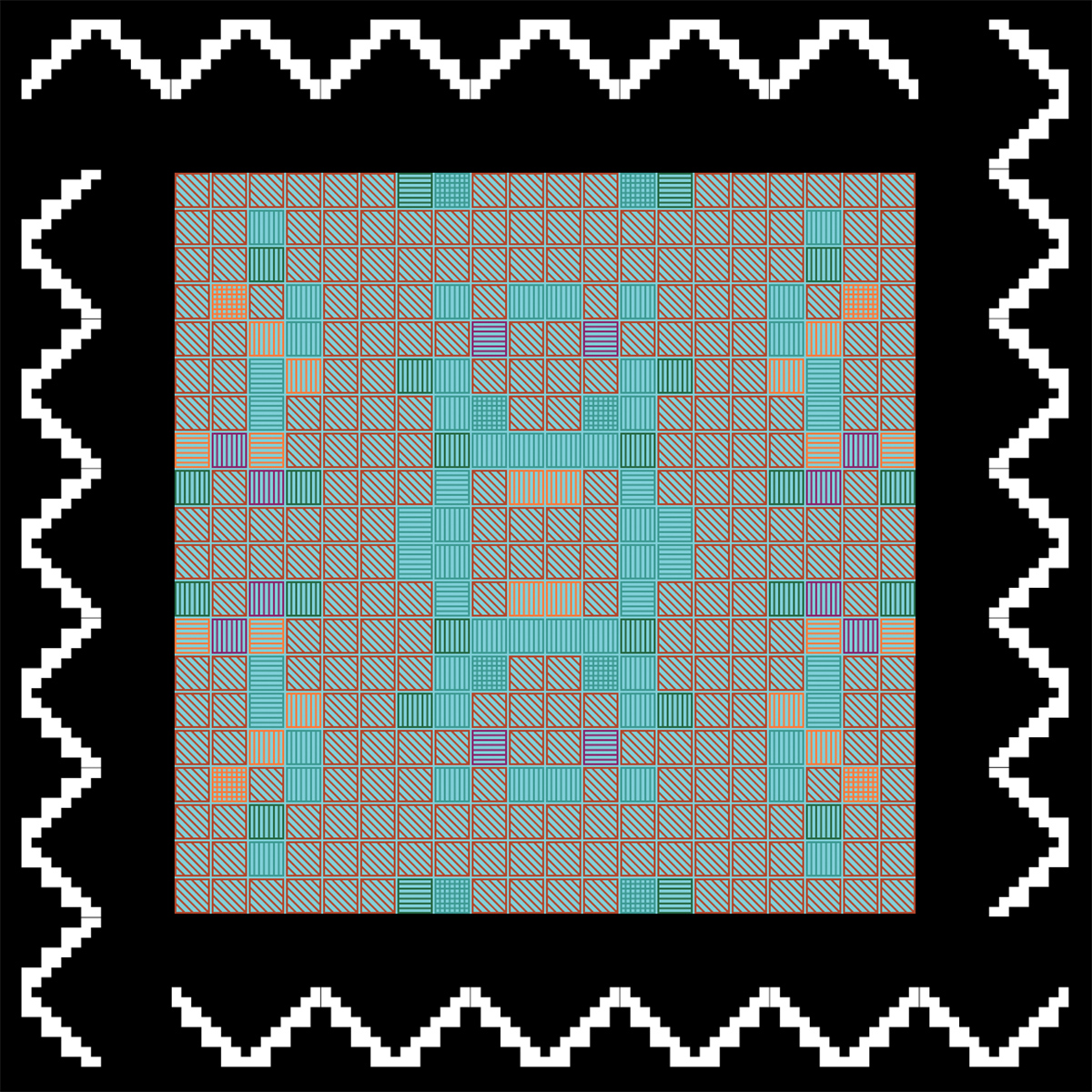 Digital quilt squares generated by the Cosmologyscape dream portal using dreams submitted by individuals from the greater Boston area
A crucial aspect that ties together the reflection on the meaning of the human being in its entirety is the way Cosmologyscape addresses the issue of artificial intelligence and data management. We often view technology as an inherently extractive force that preys on our attention and privacy. Kite and Wormsley, however, propose an alternative model based on “ethical technological protocols.” Participants’ dream data is not capitalized upon or stored indefinitely for user profiling; it is protected, curated, and ultimately destroyed according to governance practices inspired by free, prior, and informed consent.
In place of the void left by deletion, the participant receives a restorative gift: personalized herbal recipes and infusions based on the nature of their dream. This approach demonstrates that the human being of the future need not necessarily choose between alienating hyper-technology and a nostalgic return to a pre-industrial past. Technology can be “tamed” and subjected to the laws of care, of ancestral heritage, and of respect for the earth, water, and air.
Both “The Pavilion of Dreams” and “Welcome to Cosmologyscape” remind us of what makes us profoundly human: the ability to inhabit multiple worlds simultaneously, to honor the past of our ancestors, and to build bridges to generations yet to be born. In this sense, the dream ceases to be a nocturnal chemical phenomenon and becomes a living architecture. The artworks by Kite and Wormsley are the foundations of this new pavilion: a place where millennia-old spirituality and the computational machine cease to wage war and instead join forces to guarantee humanity its most sacred right: that of imagining its own liberation.
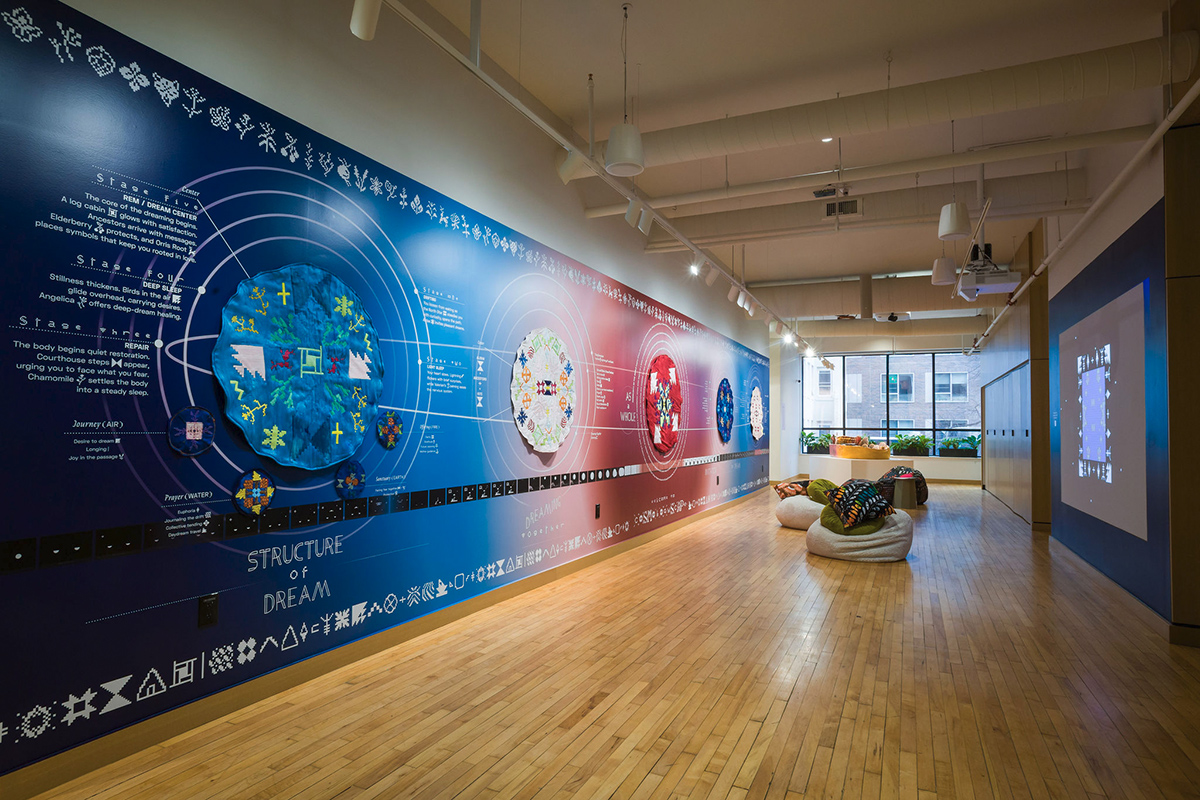 Tim Correira, Welcome to Cosmologyscape, by multidisciplinary artists Kite (Oglála Lakȟóta) and Alisha B Wormsley, on view in Wagner Gallery February 26 – June 26, 2026
[ad_2]
Source link