
[ad_1]
In the context of the Anthropocene, landscape can no longer be understood as a neutral space. It is a site shaped by intertwined ecological, social, and technological forces, where the impact of global capitalism is materially inscribed in the environment. This condition calls for a reconsideration of the relationship between humans, nature, and technology, challenging the idea of nature as external to human activity.
Within this framework, photography appears not simply as a means of representation, but as an ecological practice, participating in how environments are seen, organised, and made legible. It shifts attention beyond the human as central observer toward more distributed forms of life and agency. In this view, photography becomes a way of exploring relational systems between humans, nonhuman life, and technological infrastructures, while opening up possibilities for imagining alternative modes of coexistence within ecological crisis.
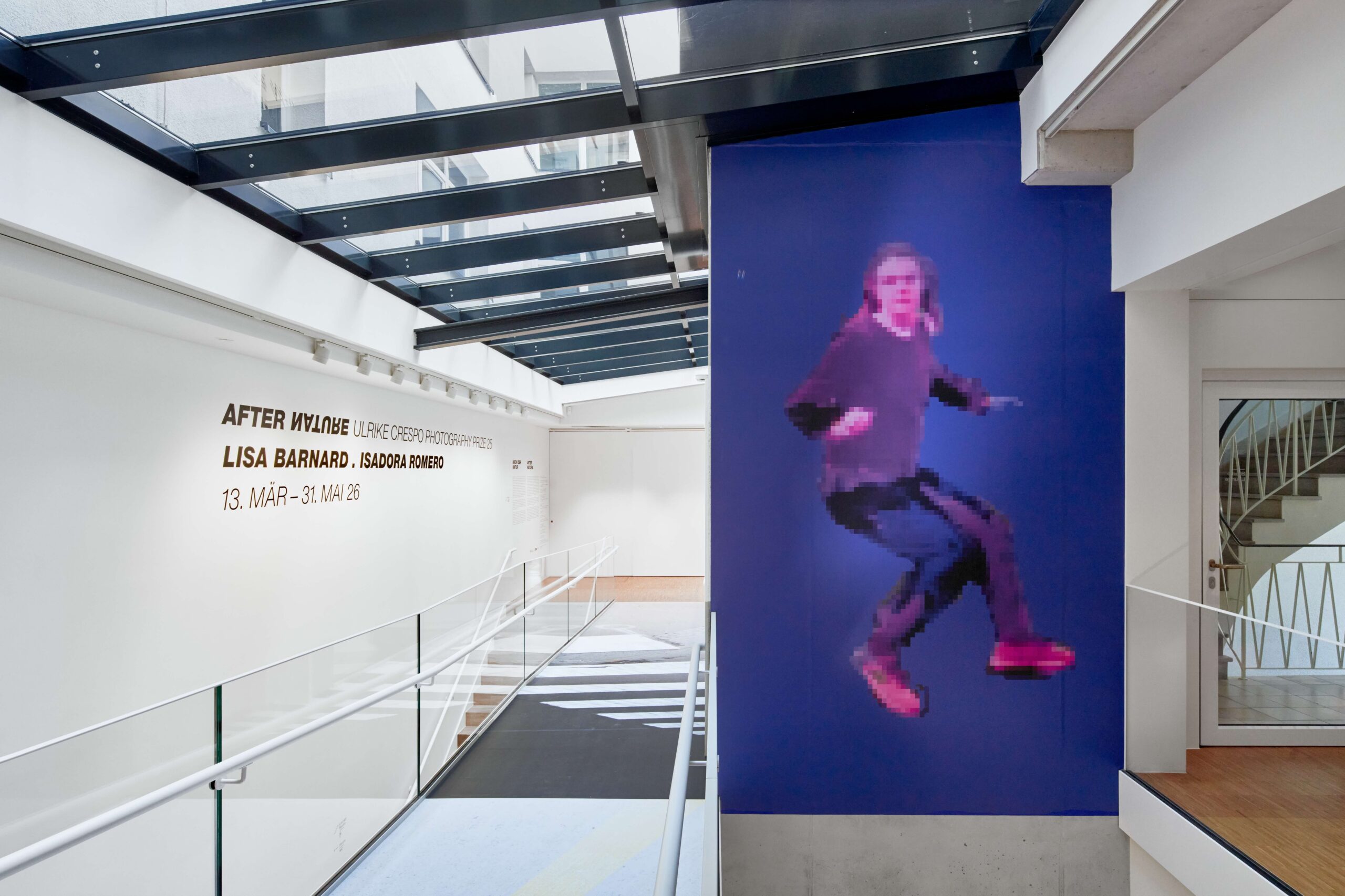
This sensibility lies at the heart of the After Nature. Ulrike Crespo Photography Prize, which continues the legacy of photographer Ulrike Crespo. Developed in collaboration with C/O Berlin, the prize and accompanying exhibition serve as a platform for publicly encountering, exhibiting, and interrogating the relationship between humans and the natural world, and how this relationship continues to shape contemporary artistic practice.

The Prize and its Framework
The Ulrike Crespo Photography Prize is one of Europe’s most important awards for photography, awarded annually to two international artists working with lens-based media. It foregrounds practices that engage with the shifting ecologies of the present and expand new understandings of nature and art. The prize addresses urgent questions of ecological entanglement and technological mediation, reflecting a sustained inquiry into how natural environments are perceived, interpreted, and represented – among the most pressing concerns of our time.
The prize addresses urgent questions of ecological entanglement and technological mediation, reflecting a sustained inquiry into how natural environments are perceived, interpreted, and represented – among the most pressing concerns of our time.
The previous edition brought together practices that traced the histories of ecology and colonialism. Laura Huertas Millán’s Curanderxs unfolded as a speculative narrative about femmes secretly distributing coca leaves in the seventeenth century, using fiction to address the fragmentary histories of colonial appropriation of nature. Meanwhile, Sarker Protick’s অঙ্গার . Awngar turned to the historical region of Bengal (today spanning India and Bangladesh), tracing the colonial legacies of railway expansion and coal mining through a photographic engagement with the present.

For the 2025 edition, the jury, comprising twelve international experts, unanimously selected Lisa Barnard from the United Kingdom and Isadora Romero from Ecuador as the winners. For both artists, photography is not a neutral record but a site of meaning-making. Their independent practices converge around a shared focus on entanglement: between people and environments, physical landscapes and digital systems, and experience and abstraction. Moving beyond representation, they treat images as active forces within ecological, social, and technological systems.
Where Vision Fragments
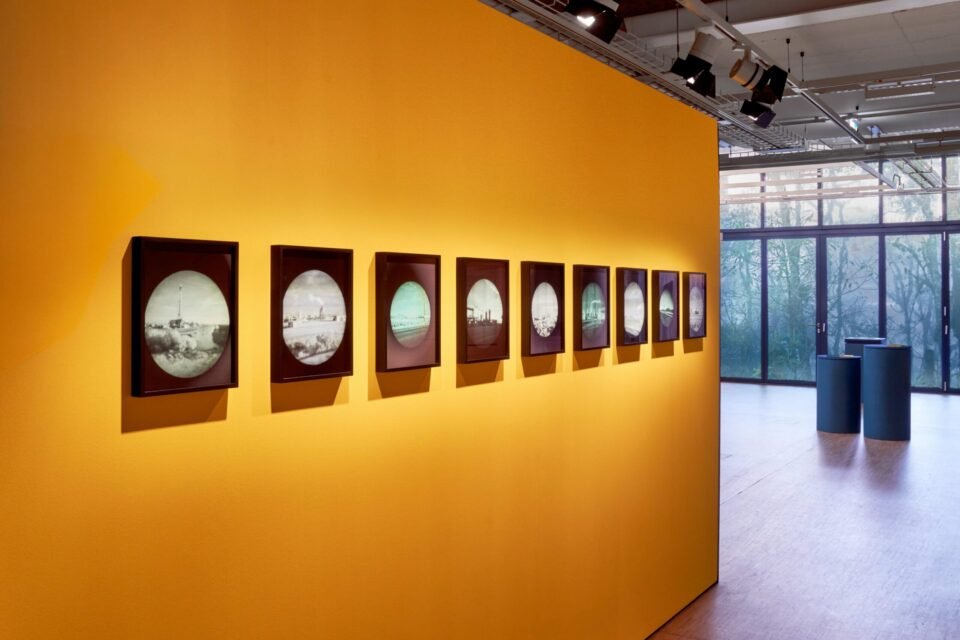
Lisa Barnard – an artist, researcher and lecturer at the University of South Wales – brings together the material qualities of photography with political questions around the military-industrial complex, technological change, ecology, and perception. Working across photography, audio, video, and text, she combines documentary methods with contemporary visual strategies and digital technologies. In You Only Look Once (2025), Barnard explores the edges where perception begins to fragment and reassemble across animal, human, and machine worlds. Vision here is an evolving field of sensing that slips between organic attention, computational recognition, and the architectures that bind them.

The project is rooted in California’s Salton Sea, a hypersaline, chemically burdened lake where ecological collapse meets industrial ambition. Used for military testing during World War II, the area is now promoted as a future source of lithium for new technologies. From there, the work expands to military testing grounds, autonomous vehicles, and machine vision systems.
In You Only Look Once (2025), Barnard explores the edges where perception begins to fragment and reassemble across animal, human, and machine worlds.
Moving through photography, video, and sound, the project traces the subtle operations by which the world is translated into signals, patterns, and extractable forms. Barnard reflects on the role of sound and echolocation, drawing parallels between bats and the sensor systems used in autonomous vehicles. Like humans, these machines rely on multiple forms of information to move through the world.

Yet even advanced AI systems can only detect and classify, as they lack consciousness or genuine experience. Barnard places this accelerated seeing alongside the slower, more uncertain rhythms of lived experience, where perception is partial, embodied, and never fully resolved. In tracing this gap, the work suggests that visual technologies do not simply record what is already there, but participate in shaping what can appear at all, binding perception to the ecological and technological pressures that define the present.
Forest as a Space of Exchange
Isadora Romero is a visual storyteller from Ecuador, working at the intersection of documentary and fine-art photography. Committed to social and ecological justice, she focuses on food sovereignty and the relationship between people and land, particularly in relation to agriculture and the preservation of agrobiodiversity in Latin America. As co-founder of Ruda Colectiva, Isadora Romero helped establish a space for Latin American women photographers to come together around shared experiences of inequality and structural injustice within the field, and to develop a collective framework for mutual support, critical discussion, and shared growth.

In Notes on How to Build a Forest (2025), Romero traces the tangled histories of Ecuador’s cloud forests: the Chocó Andino de Pichincha biosphere in the Yunguilla community near Quito and the Mache-Chindul reserve on the Pacific coast. The forest here is not merely a backdrop but an active site of relations of coexistence. The project regards Indigenous trade routes, ancestral plant knowledge, and community-led conservation practices as living knowledge systems, framing the forest as a space of exchange and shared responsibility rather than as a site of separation.
As co-founder of Ruda Colectiva, Isadora Romero helped establish a space for Latin American women photographers to come together around shared experiences of inequality and structural injustice within the field, and to develop a collective framework for mutual support, critical discussion, and shared growth.
Romero’s investigation into the transmission of knowledge across generations focuses above all on the traditions of Indigenous cultures such as the Yumbo and Jama Coaque. Her work follows the traces of trade routes known as culuncos that already existed centuries ago and engages with artefacts in local museums, which she restages using vividly coloured fabrics. The project was developed in close collaboration with local communities, scientists, and artisans, integrating photography, textiles, video, and sound.

Together, these forms create a slow, attentive engagement with the forest and its ecology. Rather than presenting it as untouched or pristine, the work frames it as a shifting set of relations between human and more-than-human life – an ecology continually shaped and reworked through weather, memory, extraction, and care, in which coexistence is not necessarily a given but something consciously negotiated and exchanged.
The exhibitions You Only Look Once by Lisa Barnard and Notes on How to Build a Forest by Isadora Romero are on view until 31 May 2026 at Crespo Open Space in Frankfurt am Main.
[ad_2]
Source link