
[ad_1]
Memoryscapes, the second iteration of the Architecture Connecting exhibition series at Denmark’s Louisiana Museum of Modern Art, dives into the past, harnesses what already exists and offers a glimpse into how architects can use the present to shape a future.
Curated by Kjeld Kjeldsen and Mette Marie Kallehauge, the series unfolds the plurality of architecture, specifically its relationship with the sciences and humanities. Memoryscapes flutters between the palpable and the intangible, calling on earth systems, cultural identity, construction technology and contextual immersion.
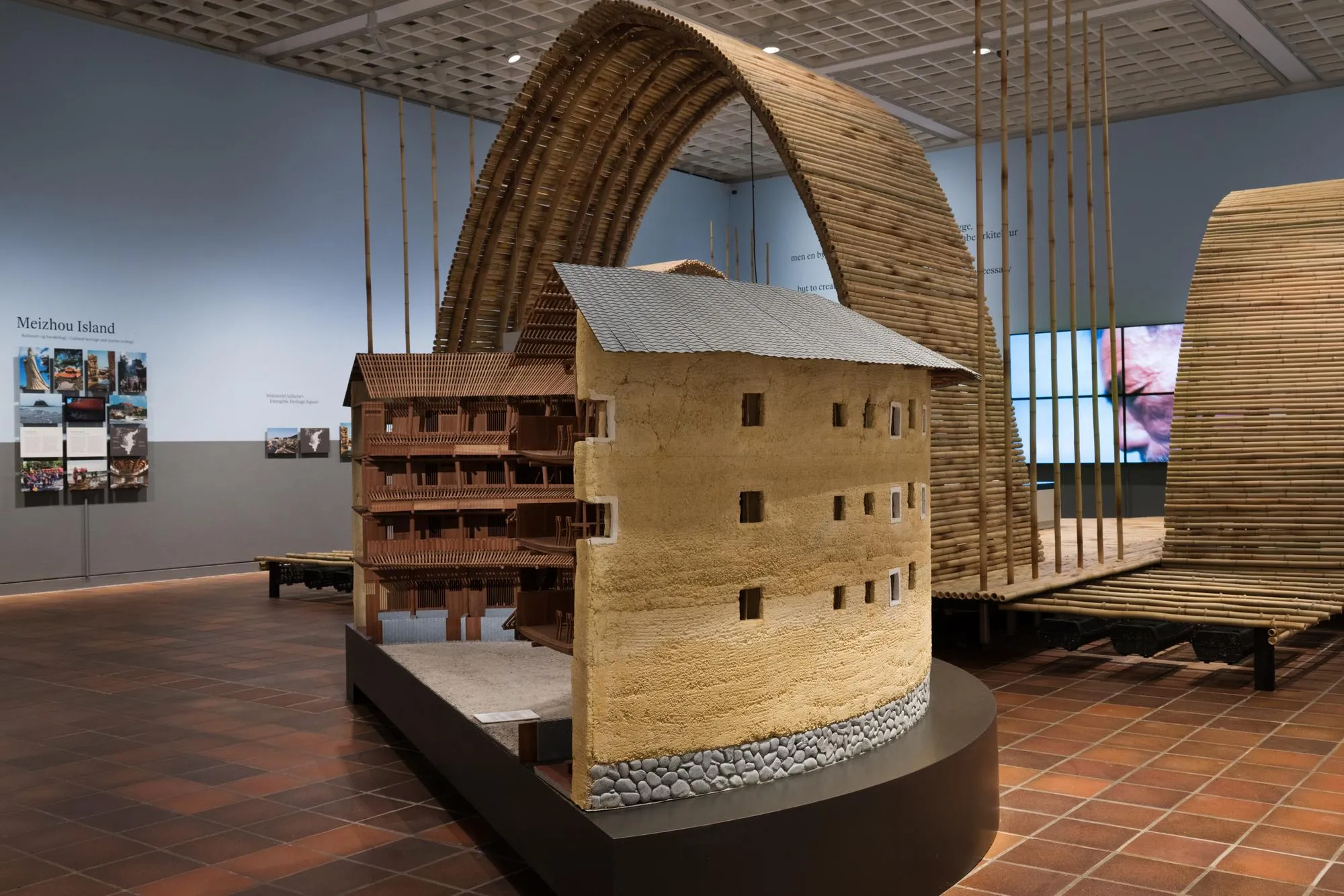
Installation view (photo: Camilla Stephan / Louisiana Museum of Modern Art)
The exhibition brings two studios side by side: Paris-based Atelier Tsuyoshi Tane Architects (ATTA), founded by Tsuyoshi Tane; and Chinese studio DnA_Design and Architecture founded by Xu Tiantian. In their own characteristic ways, they present their contrasting visions and approaches to architectural fieldwork, geographical mapping and cultural archaeology, playing with the audience’s experience of scale and intervention.
What is thought to be a necessary intervention and what defines architecture is key to both studios’ work. Together, they raise questions about new forms of practice and what the role of the architect is today – from master architect to mediator – as well as not controlling the narrative and outcome but letting people and place take the lead.
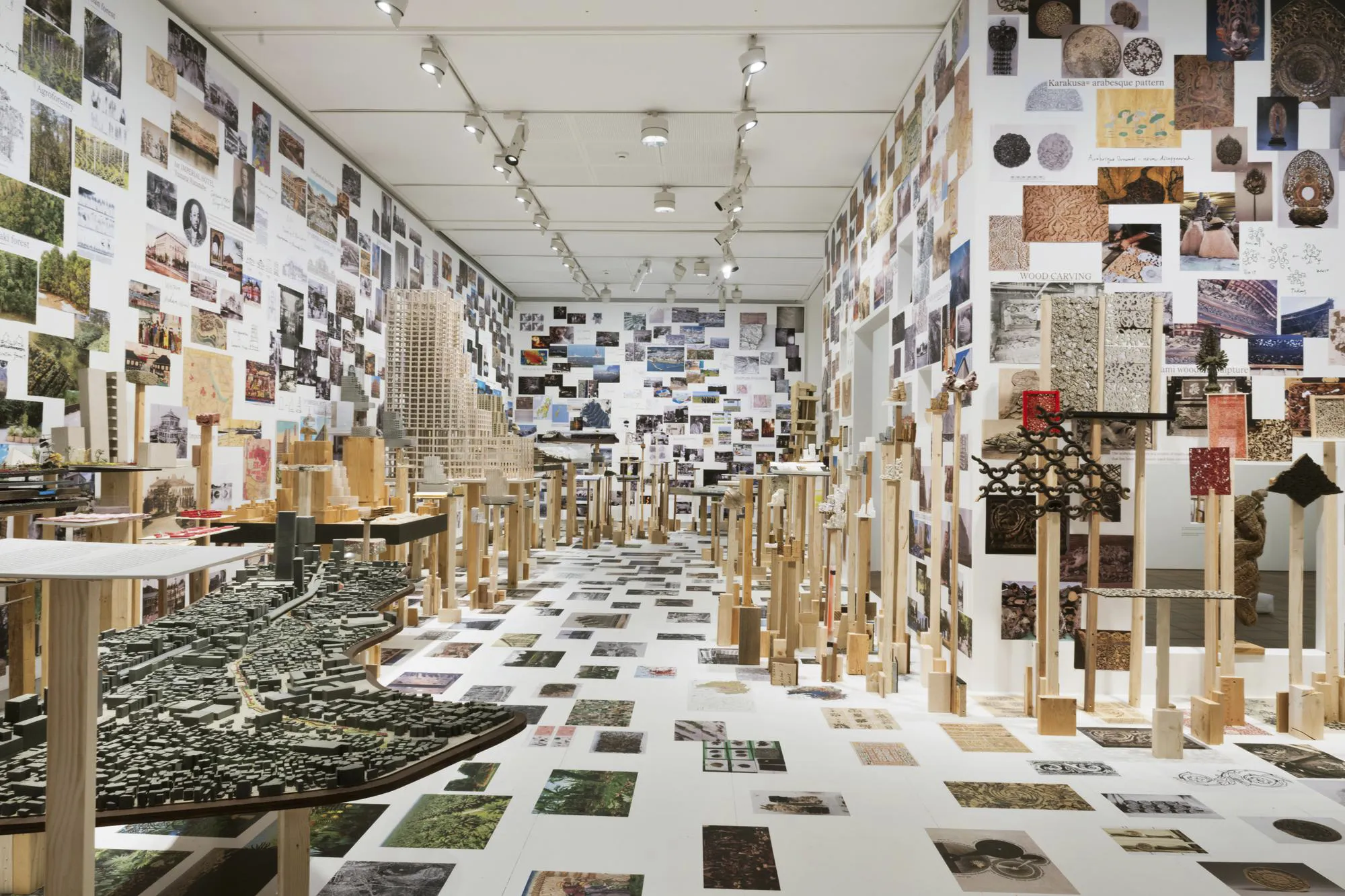
Installation view (photo: Camilla Stephan / Louisiana Museum of Modern Art)
Entering the first room, you immediately step into what feels like pages of Tane’s sketchbooks. Hundreds of cut-out images, references, sketches and notes are stuck to the walls and floors, complemented by an array of stilted small models and collected artefacts. ‘Archaeology of the future’ is what Tane quotes as his methodology – and it is apparent here. Welcoming the visitor into his thoughts and process, it’s the layers of memory, evolution of site and archaeological findings that take centre stage here. Separate projects across the gallery space build one collective picture, with Tane highlighting the importance of taking time to design beyond the 21st century and into the 22nd, for an unimaginable future.
One featured project, the Tane Garden House for the Vitra Campus in Weil am Rhein, acts itself as an analogy for future generations. Unlike many of its neighbours, the pavilion was constructed from biogenic and local materials with the aim of challenging industry standards, globalisation and overconsumption. For this project, ATTA moved from being architect to historian and ethnographer, and then back again, meticulously uncovering layers of regional vernacular and material narratives to conclude in a form and function that tell a deeply rooted story from the past into the present and future.
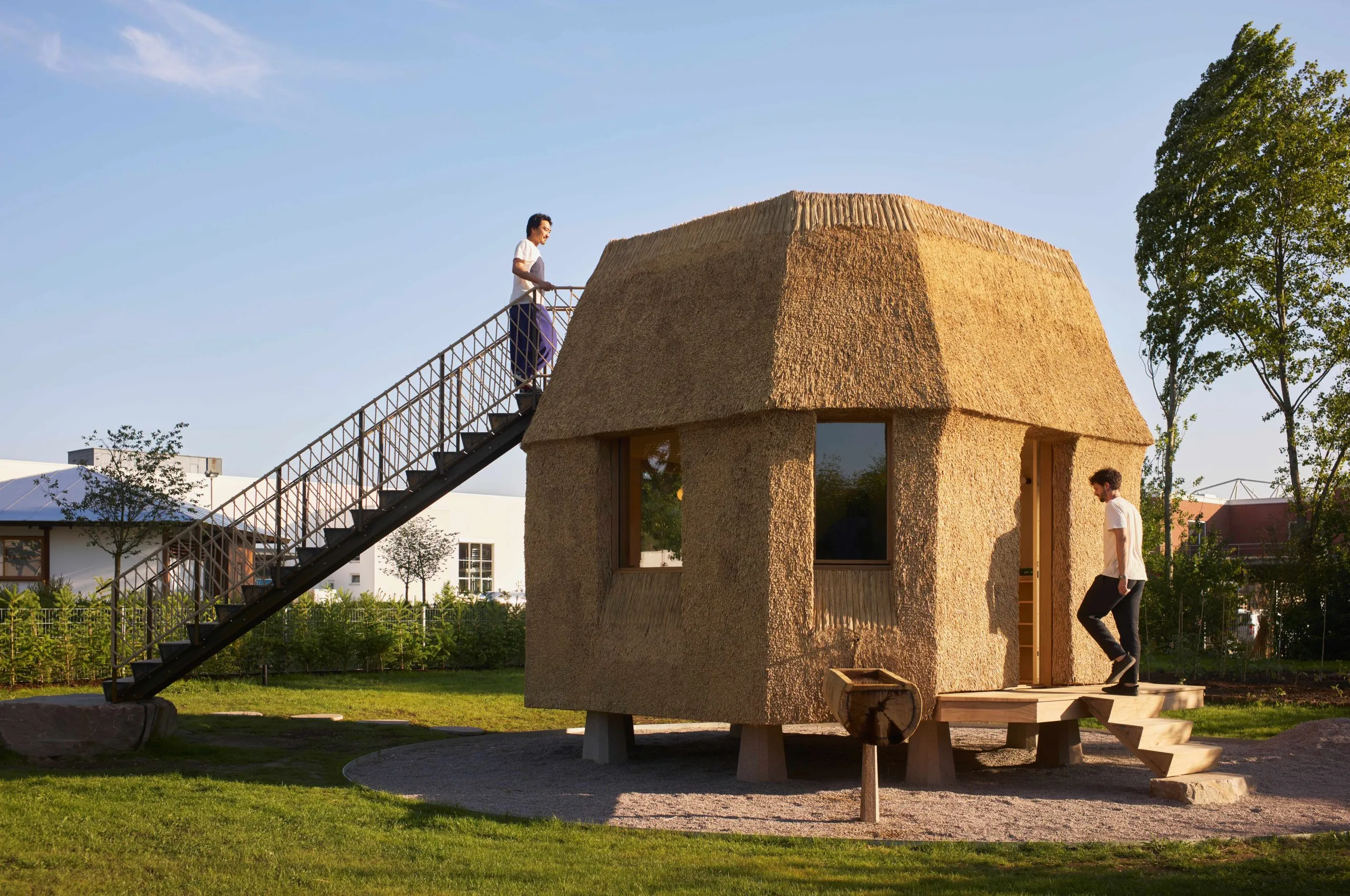
Tane Garden House at the Vitra Campus designed by ATTA (photo: Wang Ziling)
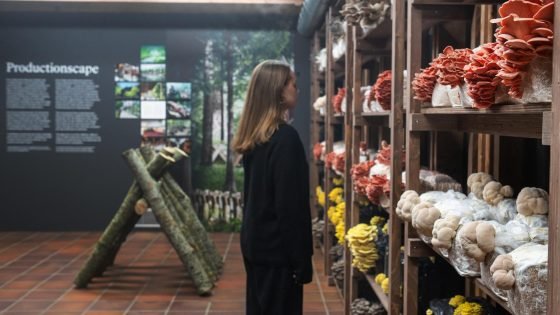
As you make your way through the exhibition, you experience a shift in scale, leaving the sketchbook behind to step inside full-scale mock-ups. Tiantian invites the audience to immerse themselves into the world of ‘architectural acupuncture’ and what she defines as ‘productionscapes’. Working primarily in rural areas, her approach pinpoints how any intervention should be the result of a deep observation and understanding of the socioeconomic fabric upon which a place thrives. The projects presented are all a result of extensive fieldwork and contextual mapping. They highlight the architecture as integral to the cultural identity of a place, supporting the channels of activity that are perhaps struggling to survive; futureproofing them. To fully understand why the result is as it is, I urge visitors to spend time watching the video accounts of interactions with the communities with which Tiantian works.
Many of the works presented by DnA_Design and Architecture are small in scale but big in soul and heart. The Seaweed Ecology Centre, Mushroom Hall and the Tofu and Brown Sugar Factories are prime examples of how Tiantian carefully turns industrial agro and aqua-culture practice into living cultural museums.
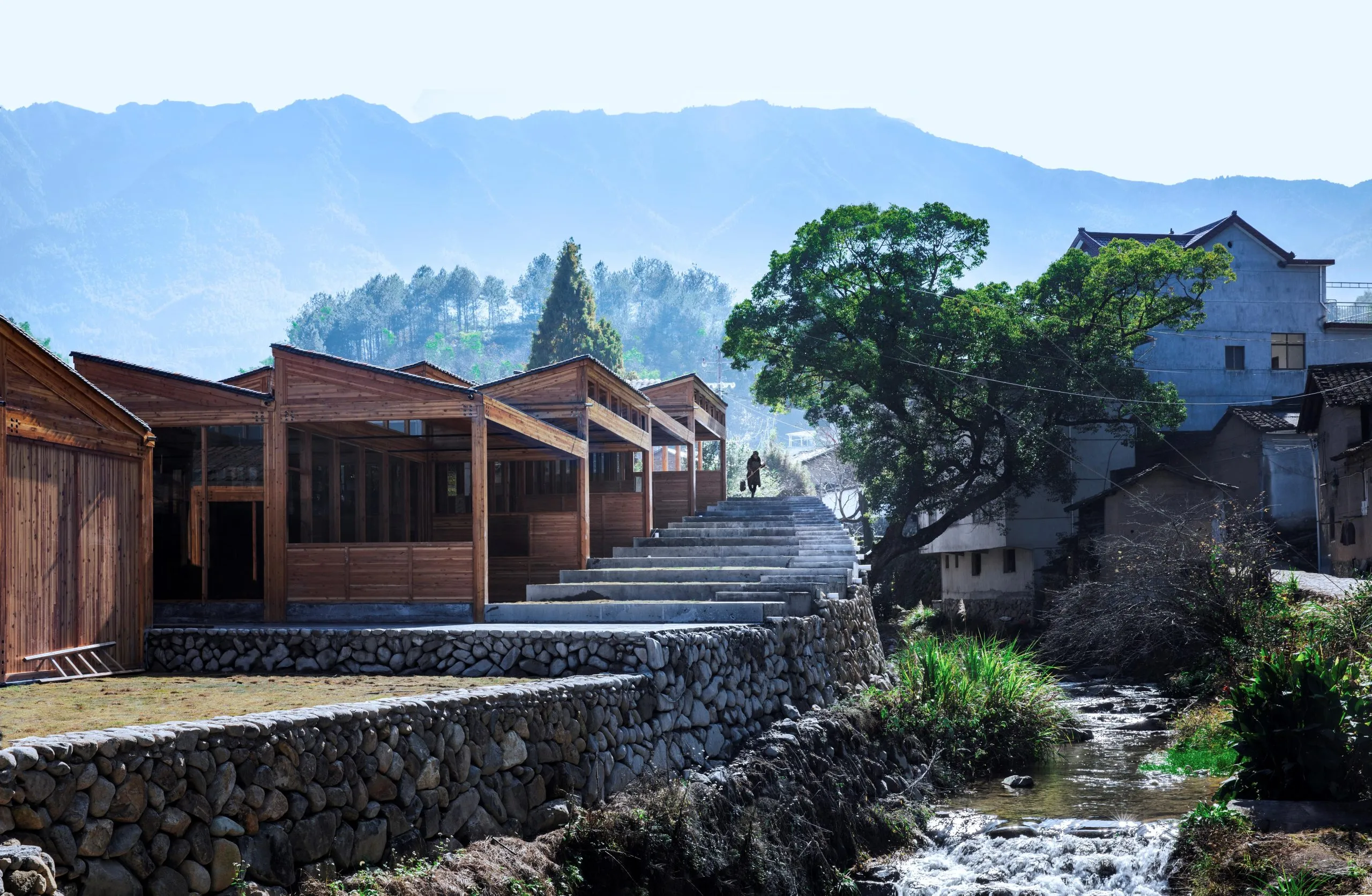
Tofu Factory in Lishui, China, designed by DnA_Design and Architecture (photo: Wang Ziling)
As part of the ‘productionscape’ approach, traditional manufacturing practices are elevated to meet current trading and safety standards and are opened as sites of cultural interest: on one hand securing the economic stability of the area, while preserving the community’s identity and craft on the other.
Memoryscapes presents two architectural approaches that identify the importance of amplifying and adding value to what already exists. As curator Kallehauge reminds us, ‘acupuncture is the smallest intervention required to connect what already exists … conducting energy to a greater network’. What a beautiful vision for a world in desperate need of positive energy and a caring hand.
Jamiee Touveneau Williams is head of program at the OBEL Foundation
Memoryscapes, the second exhibition in the Architecture Connecting series, at the Louisiana Museum of Modern Art in Humlebæk, Denmark, runs until 17 May 2026
[ad_2]
Source link