
[ad_1]
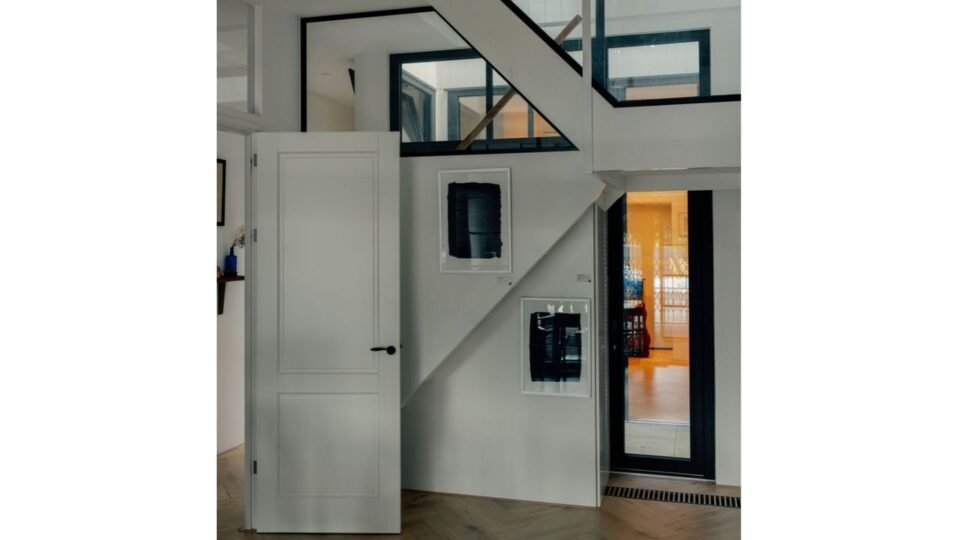
In the Eastern Docklands of Amsterdam, on Panamakade overlooking the Entrepothaven canal, is the home of Tasneem Hatimbhai and her Dutch husband, Joeri Aulman, both self-described “students of contemporary art” since their college days at Knox College in 1996. Nearly two decades on, their new three-storey live-work home, originally designed in 1994 by the Dutch architecture firm Claus en Kaan Architecten (founded by Felix Claus and Kees Kaan), and now thoughtfully redesigned by Studio Rijs Architecten, has become an unexpected outpost for South Asian contemporary art: a gallery simply called South Asian Contemporary Art Amsterdam. “Art doesn’t belong in a white cube, it belongs at home,” Tasneem says with a knowing smile, the kind that comes from a life spent not just viewing art, but living with it.


Originally from Bombay or, as she puts it, “Once from Bombay, always from Bombay”, she moved to the U.S. to study International Relations followed by Cultural Sociology. But it was a return to India, to work with a grassroots NGO, that deepened her understanding of the country. The work took her across Maharashtra, Rajasthan, Karnataka, Uttar Pradesh, and Bihar. Over time, she turned to reporting, a path that brought her into close conversation with some of the modern greats of Indian art: Jehangir Sabavala, Akbar Padamsee, and Anju Dodiya. “Those long interviews and conversations convinced me,” she says. “They made me want to belong to the world of art. Not just observe it from the sidelines.”

That world, however, took her elsewhere. “Leaving home only deepened my attachment to it,” she reflects. “Amsterdam has a complex connection with South Asia: colonial, yes, but also deeply contemporary.” She points to the vibrant Hindustani diaspora, descendants of indentured labourers sent to Suriname who later migrated to the Netherlands, as well as the growing number of South Asian artists passing through for residencies, exhibitions, or just a change of pace. “But there was no central node, no place to gather,” she says. “So I thought: why not open my home?”
[ad_2]
Source link