
[ad_1]

Recently, I have been charmed by the world of commercial art galleries. On a day in London, wearing last night’s t-shirt and a pretty worn pair of ripped jeans, I walked into an imposing Georgian townhouse in the heart of Mayfair, home to Galerie Thaddeus Ropac. Upon entering, I was greeted by a rather unfriendly lady who, with some reluctance, handed me a brochure containing the artworks displayed in the gallery: an exhibition of Eva Pade’s Sogelys. I had seen it advertised the week before, as one of the must-see exhibitions of the winter and, as a sucker for Danish art, I was eager to check it out.
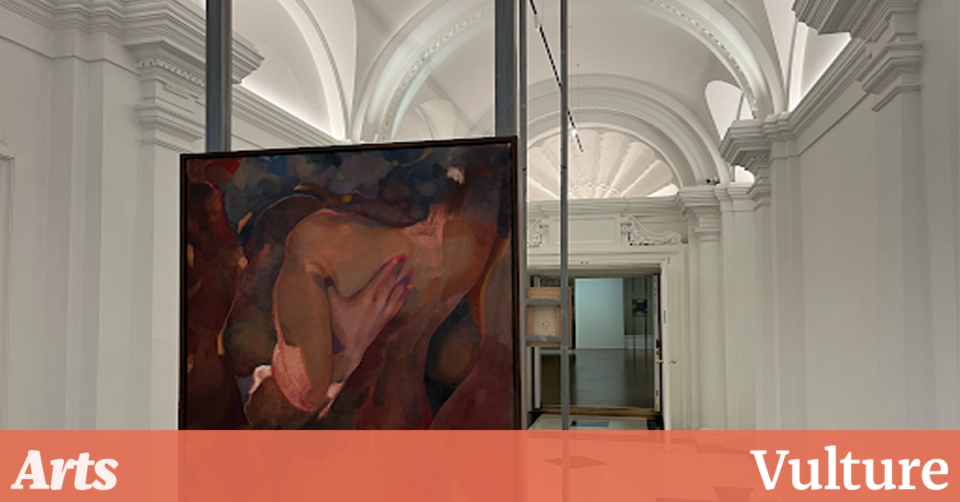
Pade is the youngest artist on the Thaddeus Ropac roster, at only 28 years, and this was her first UK solo exhibition. The premise of the exhibition was how bodies occupy space. Pade’s large scale canvases presented naked bodies in various positions, dancing, running, embracing each other. I was struck by the sheer eroticism of these figures, and the undertones of violence that lay beneath the brilliant colours and intricate light-play. Her paintings merge religious artistry, hanging like stained glass windows in a chapel, with nightclub scenery – the women huddling together like my friends and I after a long night at Heaven. The brochure described the painting as “an ecstatic dance, orgiastic rite or occult practice.”
“Free to visit, and constantly showcasing the work of up and coming artists, these galleries are a paradise for the average art lover”
As I looked around the room, I was struck by the stark contrast between Pade’s lively bodies, and the polished marble floors of this Mayfair gallery. Her paintings hung from metal bars, like screens from a stage set, bridging the gap between the art and the space, and inviting viewers to take part in the choreography of her painting.
This is the beauty of the commercial gallery. Yes, they might be a playground for the upper echelons of the art world all vying to get their hands on the hottest art pieces, but they can also make the artist a central figure, giving them the opportunity to show off their works and have the final word in the curation of the exhibition. Free to visit, and constantly showcasing the work of up and coming artists, these galleries are a paradise for the average art lover.
What’s more, in a world where the art scene is becoming increasingly elitist (you only have to look at the National Gallery with its new “Supporters Club” – a kind of Soho House knock off for wealthy art aficionados) the commercial gallery comes into its own as a space where anyone can come and appreciate art. Sometimes I like to pretend that I’m a prospective buyer just for a laugh, dressing up to the nines and asking the people at the desk whether certain paintings are still up for sale. Undoubtedly, they see right through me, but it certainly makes for a fun day out!
“Appreciating art is no longer a preserve of the elite”
And Cambridge has its fair share. Easy to miss, and often mistaken for one of the city’s many tourist traps, these galleries can be found amongst the hustle and bustle of Kings Parade and Trinity Street. I decided to pay a visit to Byard Art, a gallery across the street from Kings College and was pleasantly surprised by their abstract art exhibition, which featured mixed-media works by UK based artists such as Jill Tattersall and Sally Burch. Speaking to the gallery assistant (who was significantly cheerier than the lady in Thaddeus Ropac!) I was told that they hosted monthly exhibitions centered around broad themes like ‘spring’, rather than focusing on a specific artist.
After a few minutes of intense interrogation, what became clear was that the primary purpose of this gallery was profit. And, where I had been impressed by the clear influence of Eva Pade on the exhibition held at Thaddeus Ropac, I got a sense that Byard Art’s exhibition was set up to maximise sales. Not only did the artwork come with a physical price tag mounted on the wall next to it, the collection of art did not seem to be entirely coherent; instead it was catering to the broad tastes of prospective buyers. That being said, the sheer amount of art held by this gallery is certainly impressive: and after being told that they often host evening showings with “complementary wine”, I decided I would definitely come back!
The way I see it, commercial galleries are the future of the art world. Acting as a bridge between the artist and the public, and giving a platform to new artists on the scene. Appreciating art is no longer a preserve of the elite. What’s more, with rising interest rates and a rocky geo-political situation, the number of potential buyers are rapidly decreasing, so a visit by the average art enjoyer is increasingly valued. Choose carefully though: after a recent, slightly disappointing visit to Thaddeus Ropac where I stumbled upon an exhibition comprising a giant papier-mache ear and a ceramic table in a white-washed room, I now do my research before making a visit! The commercial gallery is a bit like a lottery: the exhibitions may be hit or miss, but unlike a lottery, the ticket is free.
[ad_2]
Source link