
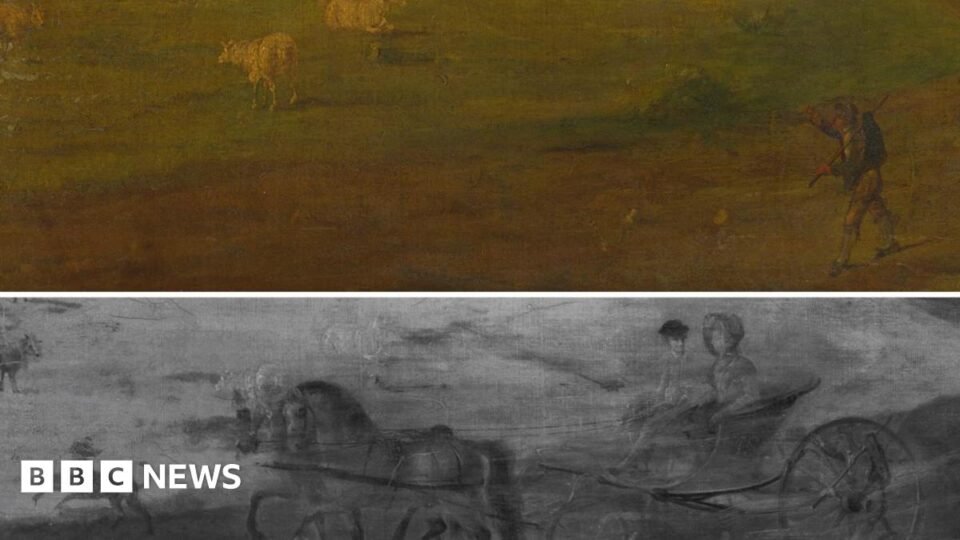
Reed said the discovery was made at the beginning of a year-long restoration project where infrared reflectography is being used to “peer through the layers of varnish, dirt, different paint layers, to have a look at the painting underneath”.
“It was in that moment that we realised the painting as we see it today is not how it originally appeared,” she said.
“In a corner of the painting a carriage, with occupants, horses and even a little dog, had been painted out.
“Even with the naked eye you can see the wheel of the carriage poking through the upper layers of paint, and almost encircling this figure that’s been later painted on.”