
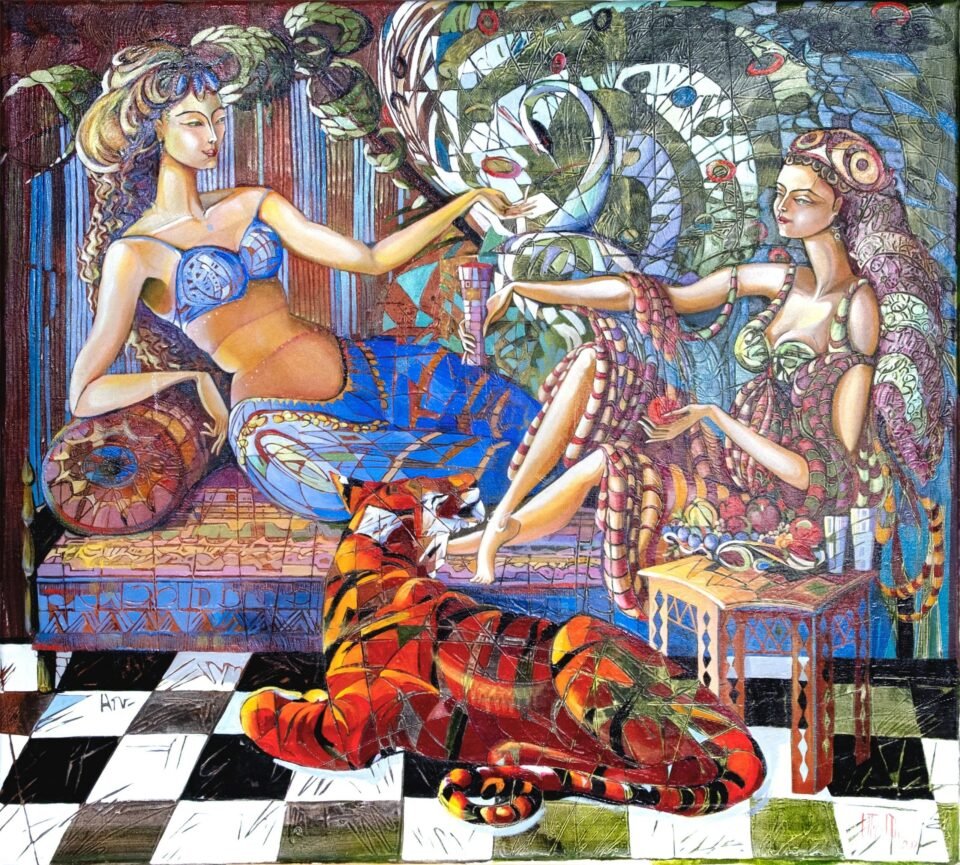
While Armenia has long been recognized for its rich and storied historical art and culture, the country’s contemporary art scene is emerging as one to watch on a global scale. Armenian artists stand out for their ability to synthesize their own cultural heritage with avant-garde approaches to contemporary artmaking, bridging tradition with self-expression. Paralleling broader rising critical and market interest and investment in regions outside of the West, ARAR Gallery of Utrecht, the Netherlands, is at the forefront of Armenian art’s mounting international presence.

Courtesy of ARAR Gallery.
Though ARAR’s mission centers on platforming and promoting Armenian art, the strength of its programming lies in its commitment to positioning it in dialogue with—rather than insular from—larger global conversations around contemporary art. “We are not presenting Armenian art as an isolated category,” said gallery founder Ashot Khalafyan. “These artists belong to the international conversation. Our role is to create continuity, visibility, and long-term infrastructure.”
The gallery’s curated presentation of contemporary Armenian artists is unbounded by style or medium. Among the painters shown, Hasmik Khalafyan takes the traditional floral still life as a starting point and imbues a sense of emotional resonance through her experimental use of color and style. Originally from Armenia and currently based in the Netherlands, her work echoes both traditional Armenian decoration and Dutch Golden Age painting.

Courtesy of ARAR Gallery.
Another painter, Anahit Mirijanyan, employs highly stylized figuration to create sumptuous vignettes that tap into themes of mythology, sensuality, and emotional experience. Other painters include Sergey Khachatryan, whose partially abstracted landscapes reveal complex psychological underpinnings, and Tigran Vardikyan, who creates fantastical compositions that allude to expansive narratives, just to name a few.
Beyond painters, the gallery also showcases work by photographer Aram Khalafyan, which operates within the context of the ARAR Gallery program by juxtaposing the material as well as the visual language of painting.

Hasmik Khalafyan, DaVinci Sunflower (2024). Courtesy of ARAR Gallery.
Arguably one of the gallery’s most distinguishing elements is the inclusion of wearable pieces based on original paintings featured in the gallery. Limited edition garments made from silk mirror other forms of editioned art; each is numbered and comes with a certificate of authenticity. The initiative offers a dynamic and accessible way for viewers to engage with the work of ARAR Gallery artists and bring their work into everyday life.
Together, the ARAR Gallery program acts not only as a bastion for contemporary Armenian art but a compelling entry point for a growing community. “Our goal is not only to exhibit artworks,” said Khalafyan in a statement. “We aim to create a sustainable ecosystem where artists from Armenia are recognized internationally, collected seriously, and contextualized within contemporary discourse.”
Learn more about ARAR Gallery here.