

The world of contemporary art is now engaging more closely with the public, extending its reach beyond gallery spaces in Kuala Lumpur to communities across the country – exploring the true essence of Malaysia through the lens of art.
National Art Gallery director-general Amerrudin Ahmad said this vision is being realised through the After Monsoon Project: Tera-Kota exhibition series, a collaboration between the National Art Gallery and Art Matters Trading, held from Oct 24–30 at Pantai Pulau Kundur in Kota Baru, Kelantan.
“To understand the true essence of Malaysia, we must go out and experience the reality of art and the culture of communities in every corner of the country,” he said at the recent launch of the programme at the beach.
He added that art is evolving through a site-specific approach, with works rooted in real places and community life rather than confined to conventional gallery walls – a shift in step with the times.
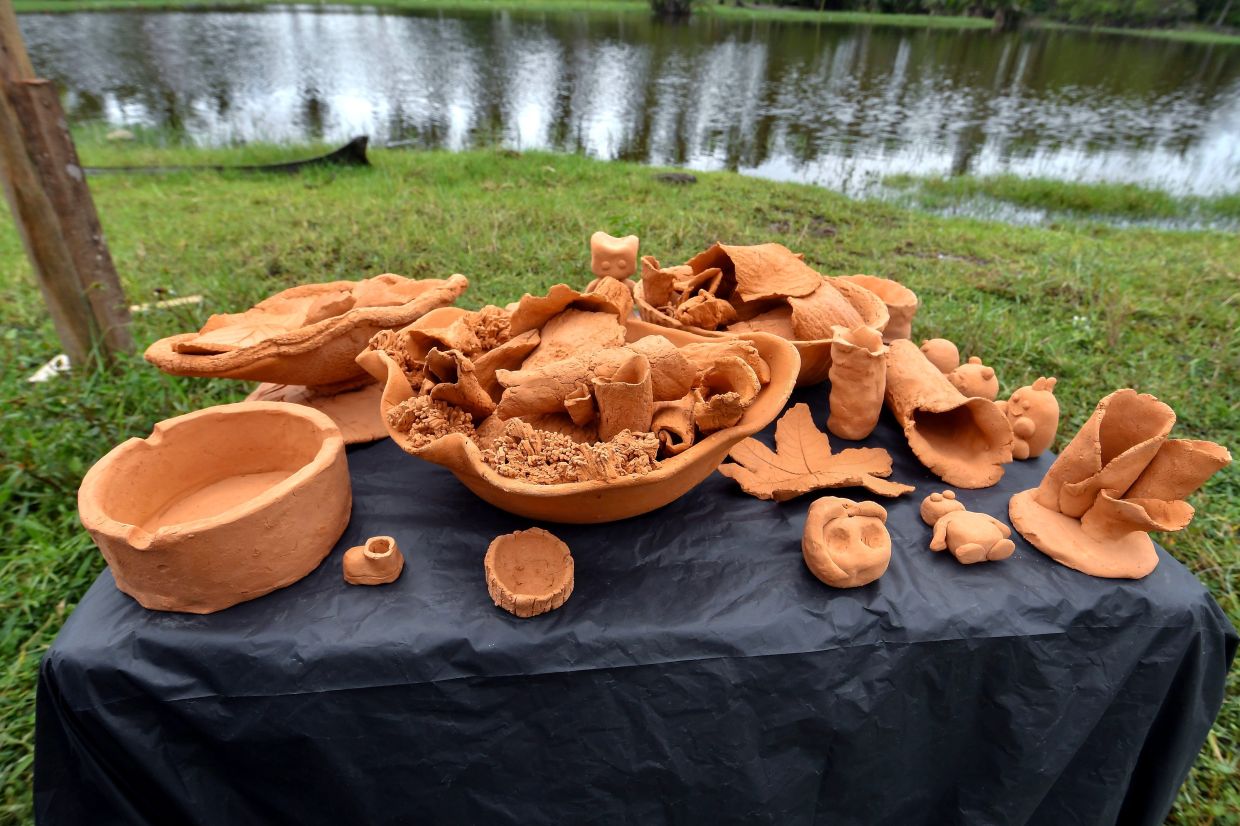 Clay sculptures are displayed at the ‘After Monsoon Project: Tera-Kota’ programme at Pantai Pulau Kundur. Photo: Bernama
Themed Tanah, Tubuh, Tapak (Land, Body, Site), the exhibition explores humankind’s relationship with the earth as a source of life and inspiration. Tera-Kota continues from the earlier After Monsoon 01 and 02 editions held in Tumpat in 2023.
On the choice of Pantai Pulau Kundur as one of the programme sites, Amerrudin said the area reflects the lives of both artistic and fishing communities who depend deeply on nature.
He described the collaboration with the After Monsoon collective as a significant partnership in building artistic networks, noting that the project is “not merely an exhibition but a dialogue that fosters collective spirit and counters individualism in the art world.”
“In addition to the exhibition, the programme also features a community art feast, or bekwoh, cultural performances, and the construction of a traditional ceramic firing facility, or gok, to be shared with the local community,” he said.
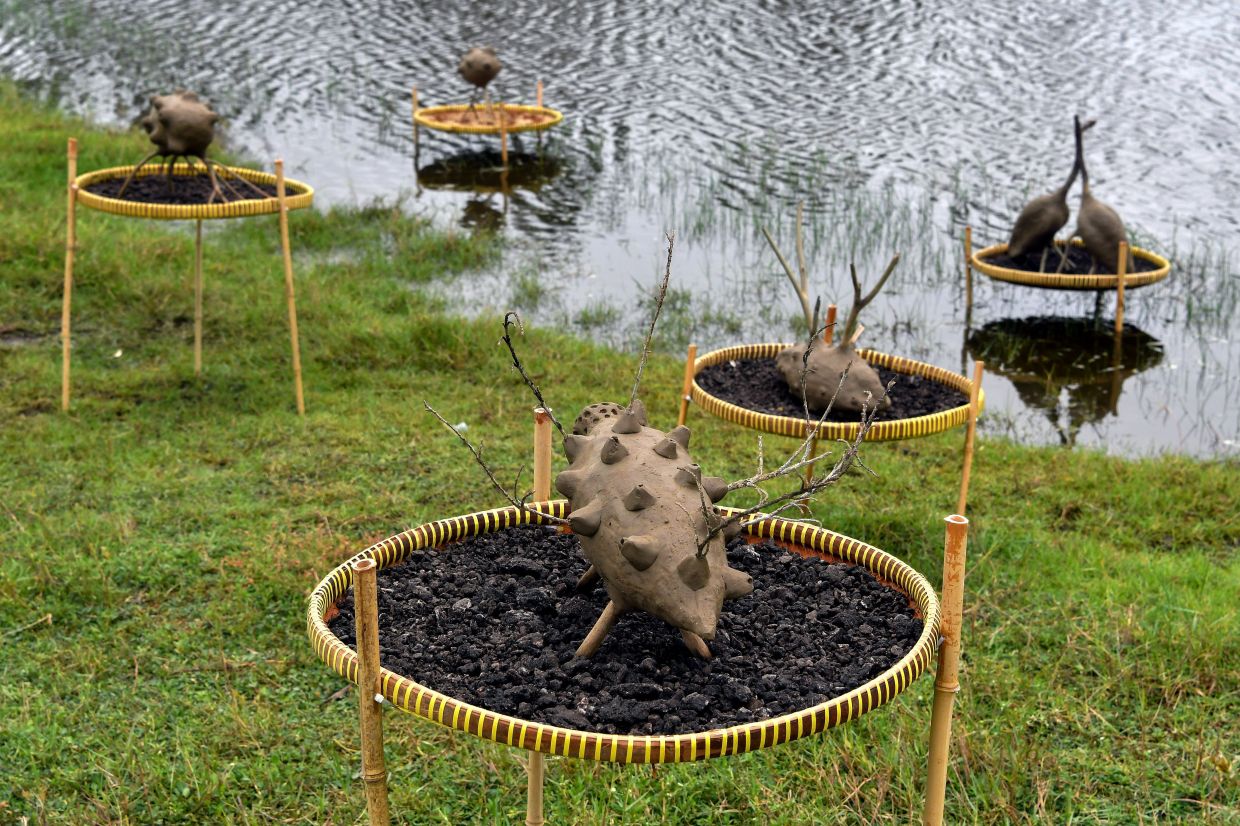 Azzaha says Pantai Pulau Kundur is an ideal venue, with nearly 90% of its residents engaged in traditional crafts such as batik, pottery, and weaving, alongside a vibrant fishing community. Photo: Bernama
Programme director Azzaha Ibrahim said Tera-Kota carries a deep symbolic meaning – “terra” refers to earth, while “kota” represents the human social body, symbolising the connection between people and nature.
He added that Pantai Pulau Kundur was an ideal venue, as nearly 90% of its residents are involved in traditional crafts such as batik, pottery, and weaving, alongside an active fishing community.
“This programme is not merely an exhibition but a space for interaction between artists, the community and students of Universiti Malaysia Kelantan (UMK). When villagers see that even earth and clay can become works of art, it provides an art education that truly resonates with them,” he said.
In addition to Pantai Pulau Kundur, three ceramic art residencies – in Kuala Kangsar (Perak), Karak (Pahang) and Langkawi (Kedah) – are also creating works based on the theme of earth, which will be showcased collectively in a special exhibition in Kuala Lumpur this December. – Bernama