
CLEVELAND, Ohio — This has been the kind of month that contemporary art is built for. On Friday, Jan. 30 from 6 – 9 p.m., MOCA Cleveland rises to the occasion with its “2026 Opening Night Celebration” which doubles as a four-exhibition kickoff.
The art museum is certainly offering a thesis statement for the times: this is what contemporary art looks like when our world’s stories, wounds and lands are met and stirred with toward an uncertain future.
The evening brings together four unique artistic expressions: “Ohio Now: State of Nature,” “Sky Hopinka: The Myth Is Now,” “KING COBRA: When You Are Between the Devil and the Deep Blue Sea,” and “Homing Instinct: Letting Go of the Shore.”
On paper, they may sound like disparate pieces. And they are. In practice, however, they manage to form a single, bracing conversation about survival — cultural, environmental, spiritual and bodily.
Start with “Ohio Now: State of Nature,” a statewide survey of artists grappling with sustainability, food systems and ecological fragility.
RELATED: MOCA Cleveland rebuilds after 2020 censorship controversy and leadership shakeup
The works are materially grounded — pollutants dredged from waterways, plant-based dyes, grass clippings and so on — and personally rooted, shaped by artists who are farmers, grocery workers and long-term witnesses to slow environmental change.
It’s a portrait of Ohio not as flyover abstraction but as living terrain that has been worked, damaged, argued over and is still at once “stubbornly generative.”
The exhibition is part of a new collaboration between moCa and the Contemporary Arts Center in Cincinnati, and it feels designed to reset the conversation about what “regional” (and regional art) can mean in a climate-defined century.
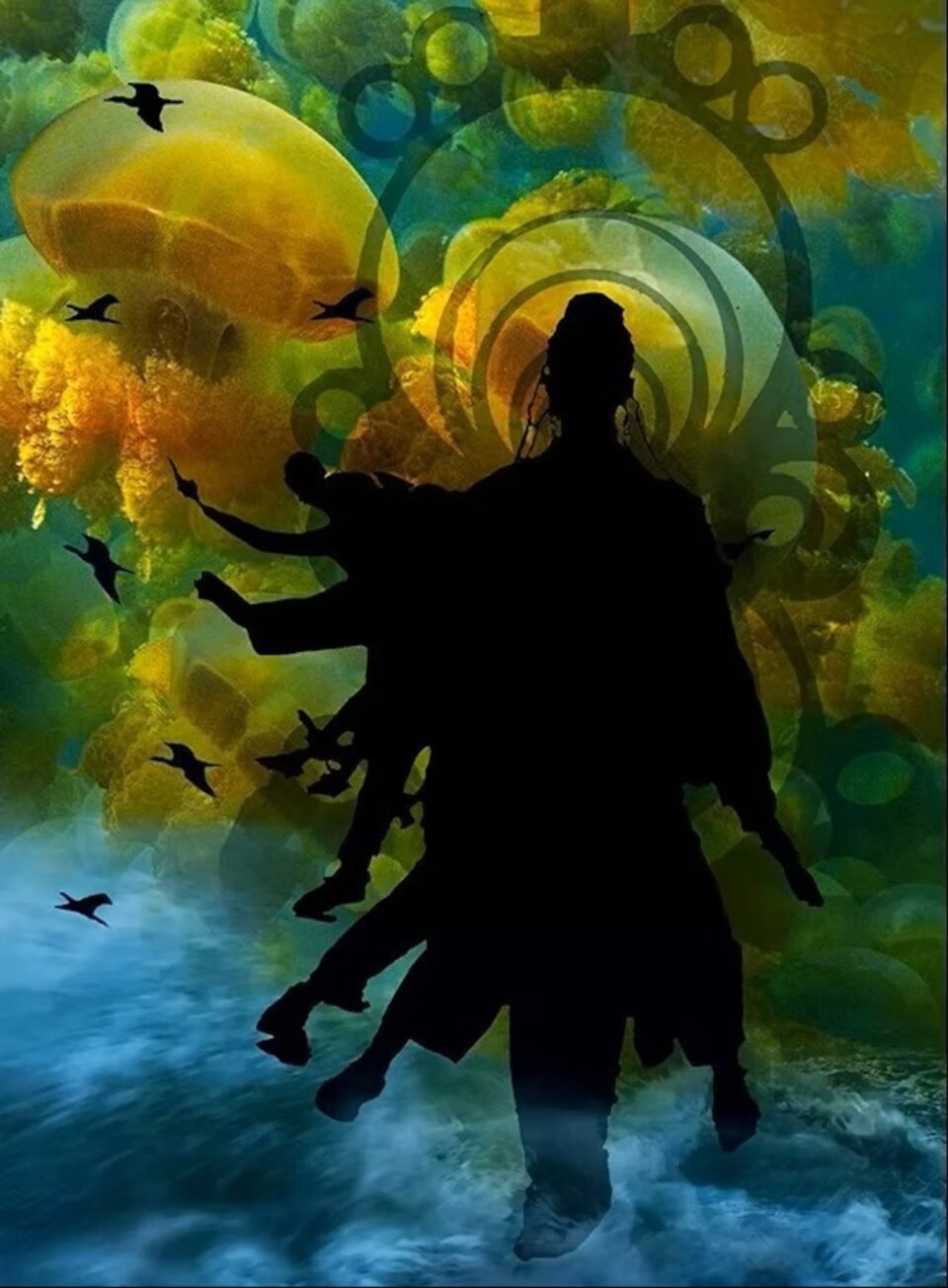
Hopinka’s “Myth” exhibition shifts the register inward. Working in film, photography and text, he approaches Indigenous identity and memory as something alive, unstable and perpetually in translation. Stories become landscapes. Language becomes architecture.
In one piece, words take flight across the wall in the shape of a goose; in another, an ancient Ho-Chunk figure moves between worlds, carrying death and renewal in the same body.
Hopinka isn’t interested in nostalgia so much as continuity — how meaning survives rupture; how culture endures by changing shape. Something about it feels dialed into this moment we are having as a society.
If Hopinka is meditative, KING COBRA is confrontational. Her monumental, caged shark, fabricated from silicone, beads and synthetic hair, hangs in a red-lit space that suggests both a cathedral and a crime scene. It is grotesque and seductive, wounded and jeweled, a memorial to the Middle Passage and the terror used to police enslaved bodies.
The work does not ask politely for reflection; it imposes it. History here suggests that past is prologue. It is suspended, dissected and breathing in the room with you — another prescient piece, given current events.
“Homing Instinct,” a multi-screen film installation by Lydia Dean Pilcher based on a story by Dani McClain, carries that history forward into speculative time.
Two friends face a government order to abandon their coastal home as seas rise. The film moves through realism, dream logic and Afrofuturist imagery, asking what it means to leave, what it costs to stay, and whether belonging is a place or a practice.
Together, the four exhibitions truly form an ecosystem: land, language, body and future.
They argue that climate change is not just scientific, that history is not just archival, that survival is not only physical. It is cultural. It is narrative. It is imaginative. Viewers will find a lot to think about and discuss here.
The MOCA 2026 season kickoff party runs 6 – 9 p.m., with a spoken-word performance by Morgan Paige, food vendors and a cash bar. Admission, pondering and discussion is free.
MOCA Cleveland is located at 11400 Euclid Ave., Cleveland, mocacleveland.org.