
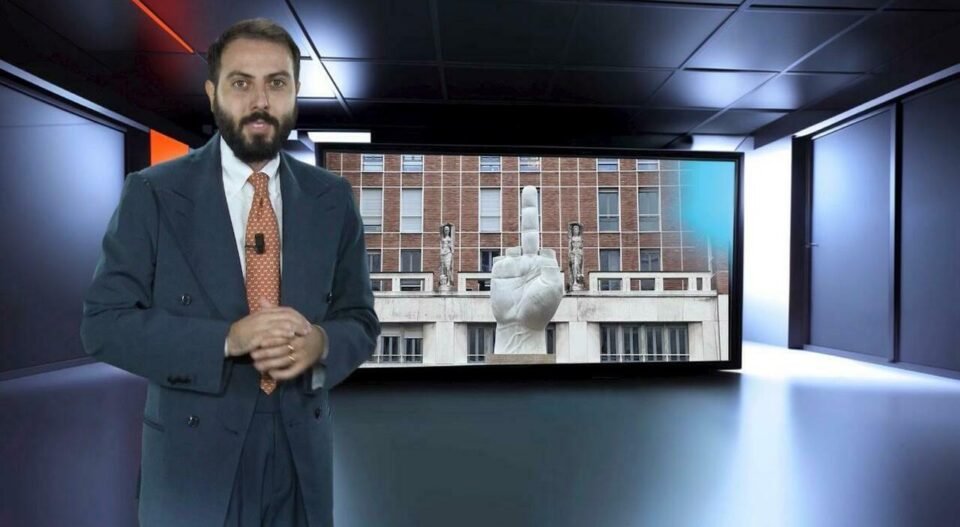
The University of Guglielmo Marconi, Italy’s first digital university, presents ‘Contemporary Art Interludes’, a new series for cultural dissemination designed for digital platforms and social media. This initiative is part of a broader reflection on the role of university teaching in the digital age and the need to renew the tools and languages of cultural communication.
“Italy is universally recognized for the exceptional value of its artistic and cultural heritage,” states the President of the University of Guglielmo Marconi, Alessio Acomanni. “For this reason, it is essential to promote increasingly broad and informed knowledge of art history, especially among younger generations, by rethinking the ways in which it is transmitted.”
In a context where information is increasingly rapid, visual, and essential, even art history can and must find new forms of storytelling. “Universities are now called upon to enhance the opportunities offered by digital technologies,” continues President Acomanni, “to make learning more accessible, clear, and consistent with contemporary modes of engagement.”
The series consists of twenty short videos, each dedicated to a contemporary or recent artwork. Leading viewers is art critic Roberto Nicolucci, who offers rigorous yet immediate interpretations, able to stimulate curiosity and reflection in a format of about sixty seconds.
From the famous ‘L.O.V.E.’ by Maurizio Cattelan—the monumental marble middle finger placed in front of the Milan Stock Exchange—to examples of contemporary visual communication like the recent Citroën electric car advertising campaign, each episode becomes an invitation to observe images with critical attention, without giving up the conciseness required by new media.
According to President Acomanni, “Educational offerings, at all levels, must be able to meet the needs of an increasingly connected audience, capable of interacting in real time with content and instructors.” In this sense, ‘Contemporary Art Interludes’ embodies the most authentic meaning of the term ‘seminar’: a space for the exchange and circulation of knowledge, dynamic and mutually enriching.
“The scenario has profoundly changed,” concludes the President, “and our University has chosen to be ready, investing decisively in innovative teaching models oriented towards the future and new generations.”
© ALL RIGHTS RESERVED
This article is automatically translated