
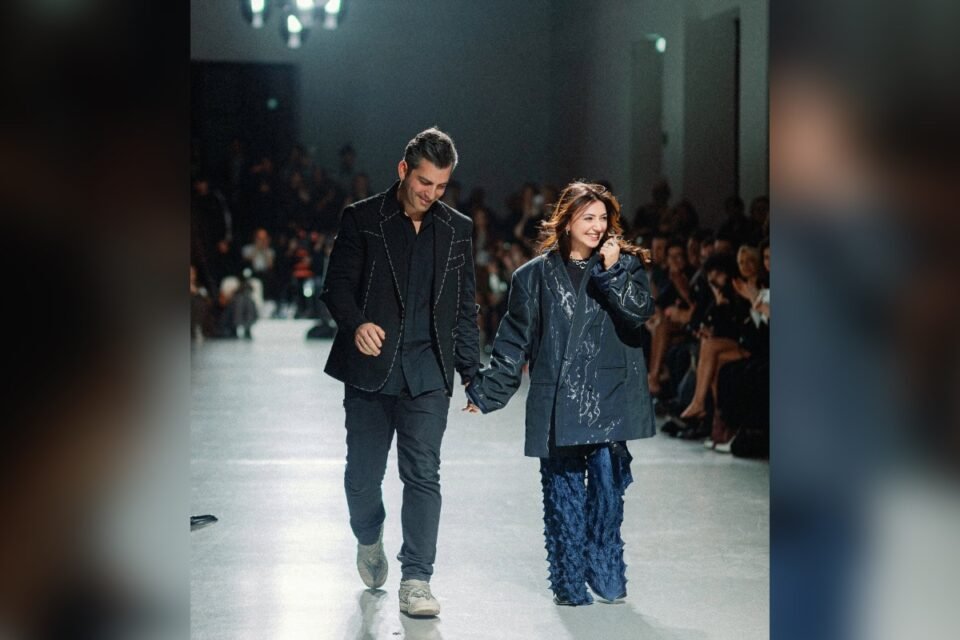
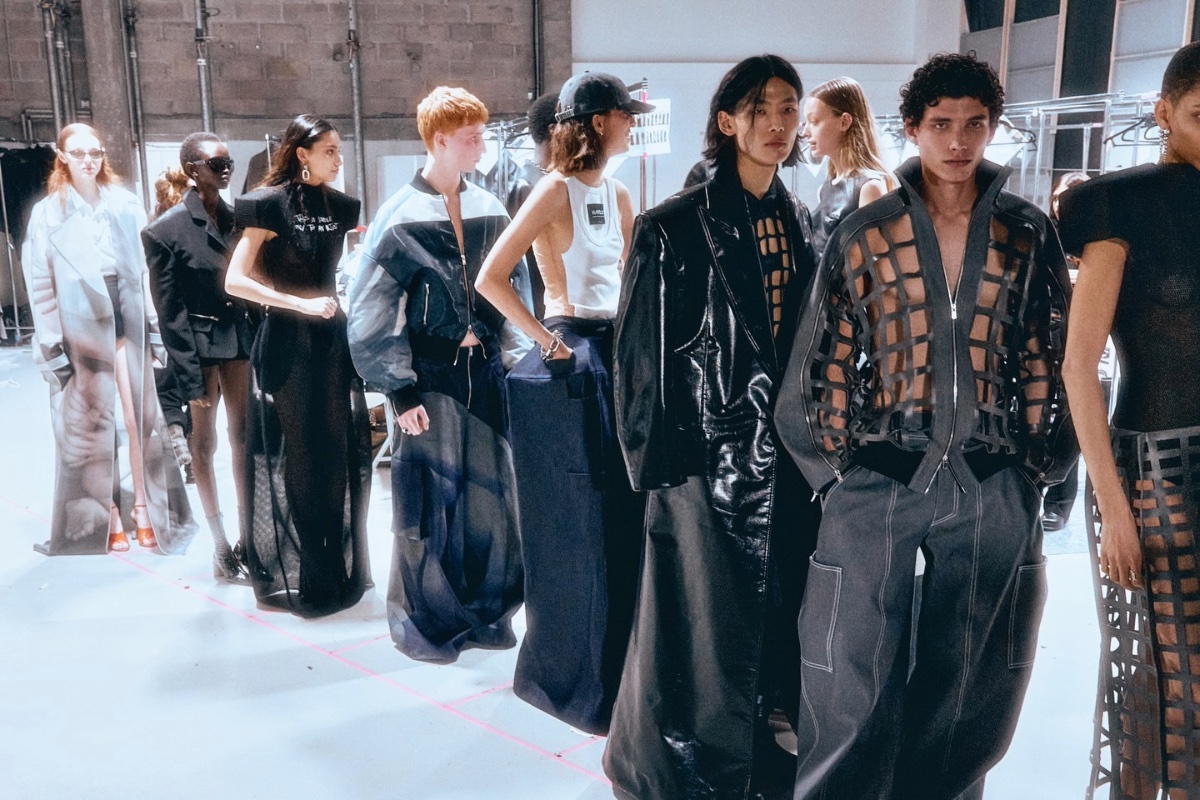
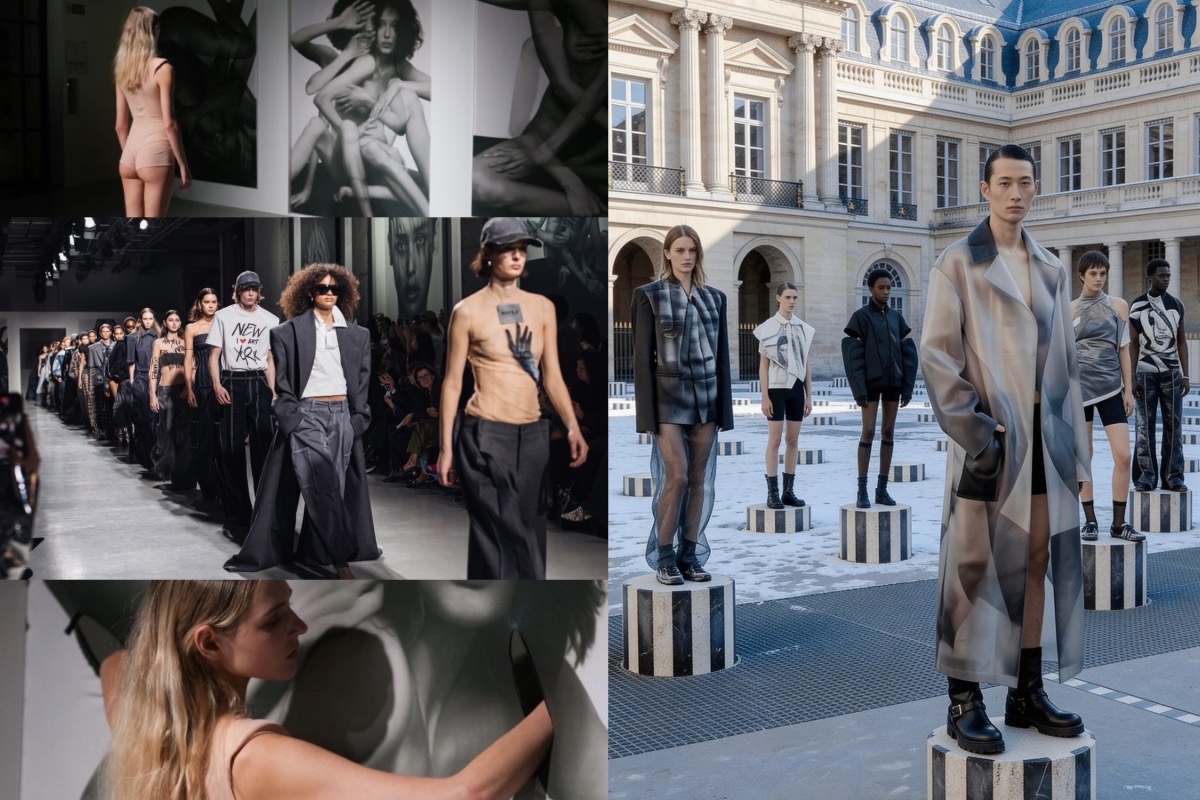
When the lights dimmed at the Palais de Tokyo during Paris Fashion Week this year, the runway revealed a collaboration between Armenian designer Armine Ohanyan and contemporary artist Tigran Tsitoghdzyan. Their collaborative brand, HAYELI — Armenian for “mirror” — debuted its first collection, Self Reflection, blending sculptural fashion with hyperrealistic portraiture and experimental fabrication techniques. Models moved through the space wearing garments that felt less like traditional clothing and more like works of art, merging technology, architecture and visual storytelling on the runway.
Beyond the spectacle of the show, however, the moment reflected something larger: the growing presence of Armenian creativity on the global cultural stage.
Ohanyan and Tsitoghdzyan each bring distinct artistic perspectives to the collaboration. Ohanyan, a Paris-based Armenian designer, has built a reputation for pushing the boundaries of what fashion can be. Her work often falls under the category of “techno-couture,” combining traditional garment construction with advanced fabrication techniques such as laser cutting, sculptural patternmaking and architectural silhouettes. Rather than approaching clothing purely as wearable design, Ohanyan treats fashion as a medium for experimentation, where technology and craftsmanship intersect.
Tsitoghdzyan, meanwhile, is internationally known for his large-scale hyperrealistic paintings. His portraits — often monumental in scale — examine themes of perception, identity and digital self-representation. Many of his works explore how individuals construct and perform identity in an age shaped by screens, social media and constant visual exposure. His paintings have appeared in major exhibitions worldwide, and his visual language — meticulous, layered and deeply psychological — is widely recognized within contemporary art.
Together, their collaboration brings fashion and contemporary art into dialogue. The name HAYELI reflects the central concept behind the collection. Self Reflection draws inspiration from Tsitoghdzyan’s exploration of identity and perception, translating those ideas into garments that blur the line between fashion and installation. Translucent materials, structured silhouettes and printed portrait imagery create pieces that invite viewers to reconsider the relationship between the body, clothing and self-image.
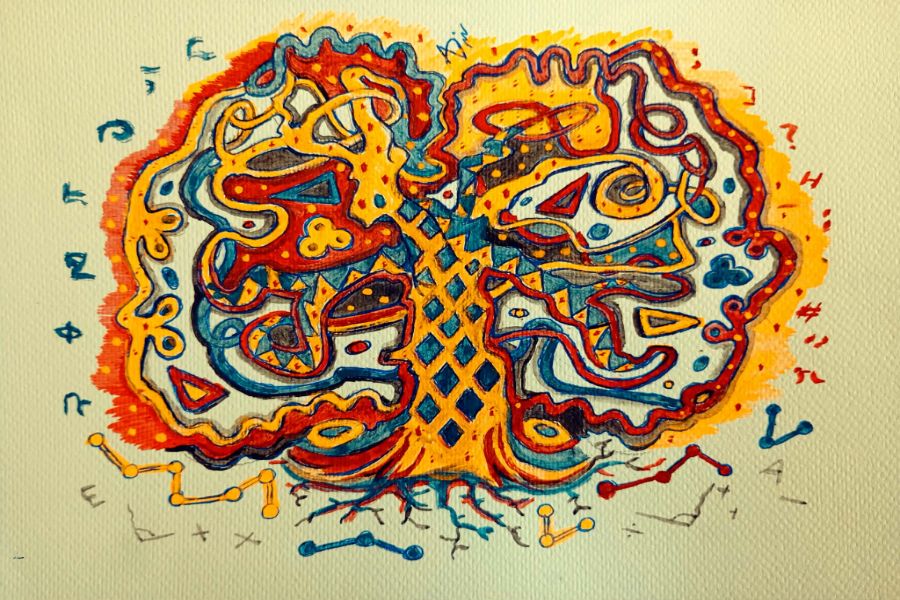

In this sense, the garments function as both design and commentary. They echo the fragmented ways identity is constructed in the modern world — through reflection, projection and constant reinterpretation.
Yet the significance of the collaboration extends beyond its aesthetic impact. Moments like this point to a broader shift in how Armenian creativity is appearing on the world stage.
For much of modern history, Armenian cultural identity in global discourse has been framed primarily through preservation — through memory, heritage and the safeguarding of tradition. These narratives remain deeply important but they are no longer the only story being told. Increasingly, Armenian artists, designers and entrepreneurs are not only preserving culture but also actively shaping contemporary creative industries.
From technology startups to international film festivals and art exhibitions, Armenian voices are present across global cultural spaces. Fashion is part of that landscape as well. When Armenian designers present work at platforms such as Paris Fashion Week, they do more than showcase a collection. They contribute to a broader redefinition of Armenian identity in the global imagination.
Fashion, after all, has long been one of the most powerful cultural languages. It communicates ideas about identity, innovation and the future as much as it does aesthetics. In Ohanyan’s case, the concept of techno-couture reflects a modern approach to design — one that embraces technology, experimentation and interdisciplinary collaboration.
This approach mirrors broader cultural shifts within Armenian creative communities. A younger generation of Armenian artists and designers is increasingly comfortable working at the intersection of disciplines, combining fashion with digital media, architecture with art and technology with storytelling. Rather than drawing solely from traditional visual motifs, many are building new aesthetic languages.
That does not mean abandoning heritage. Instead, it reflects a different way of engaging with it — one that allows Armenian identity to evolve alongside contemporary creative practices.
The collaboration between Ohanyan and Tsitoghdzyan embodies that evolution. By merging fashion with contemporary art, the project highlights how Armenian creativity can operate across disciplines while remaining rooted in cultural identity. Even the name HAYELI suggests this duality: a mirror that reflects both past and present, tradition and experimentation.
On a global scale, moments like this matter more than they may initially appear. Cultural visibility shapes how nations and communities are perceived internationally. Art, design and fashion all play a role in forming those perceptions. When Armenian designers and artists participate in global creative platforms, they contribute to a broader narrative about what Armenian culture represents today.
Increasingly, that narrative is defined not only by history but also by innovation, imagination and creative ambition.
The debut of HAYELI at Paris Fashion Week may seem like a small moment within the global fashion ecosystem. Yet it reflects a larger cultural shift — one in which Armenian creativity is moving confidently into contemporary creative industries and global artistic conversations.
In the process, Armenian identity is expressed not only through preservation but through experimentation, collaboration and forward-looking design.
As the runway lights fade and the next collection prepares to take its place, one thing becomes clear: Armenian creativity is not only remembering the past. It is helping shape the future.