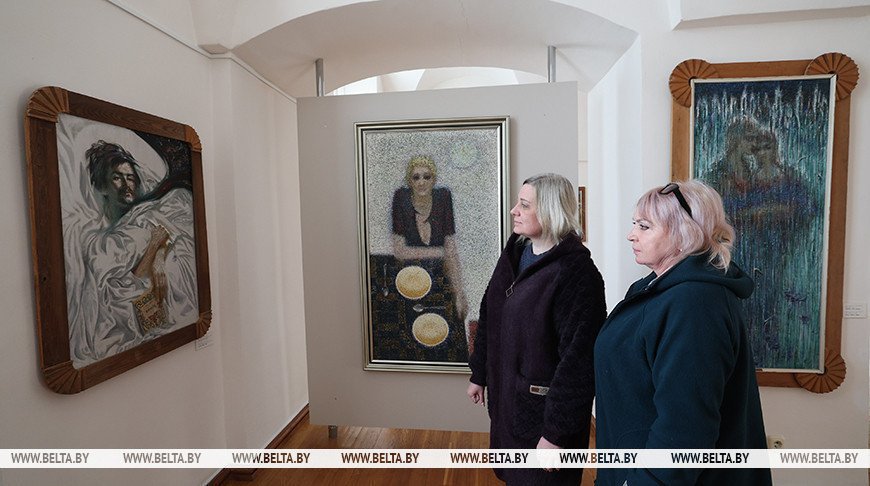
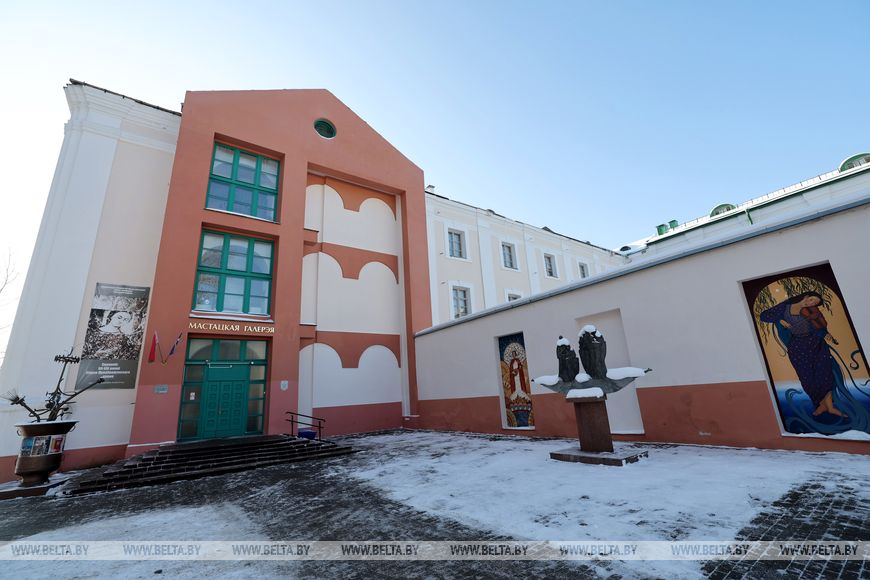
Today, the Art Gallery, one of the popular cultural institutions of ancient Polotsk, celebrates its 45th anniversary since founding. It is part of the National Polotsk Historical and Cultural Museum-Reserve and is housed in a building that was once part of the former Jesuit Collegium, an example of the 18th century architecture. Originally called the City Picture Gallery, it opened on 20 February 1981. On the eve of this milestone, BelTA reached out to the museum to talk about the rich legacy of the musuem.
Forty-five years ago, the building of the Epiphany Cathedral was given over to the Picture Gallery. In 1992, the cathedral was returned to the Polotsk Diocese, and the cultural institution moved to the nearby Museum of Belarusian Book Printing. The gallery found its current home in 2002, and the head of state participated in its opening. Now, across three floors of the former Jesuit Collegium building, visitors can see both permanent and rotating exhibitions. It also has its own art salon
 Both Belarusians and international visitors come here to explore the rich cultural heritage of the past and the works of contemporary masters. Some visitors are interested only in archaeological finds, but there are also those who prefer guided tours of all the exhibition halls. The gallery has an influx of visitors in the summer. Here, you can use an audio guide to independently explore the gallery’s collections or wander through the halls with a tour guide. Additionally, detailed information is posted at the entrance to each hall, describing what is on display – art movements, authors, historical features, and painting styles. According to the staff, a full examination of the exhibits typically takes up to three hours on average.
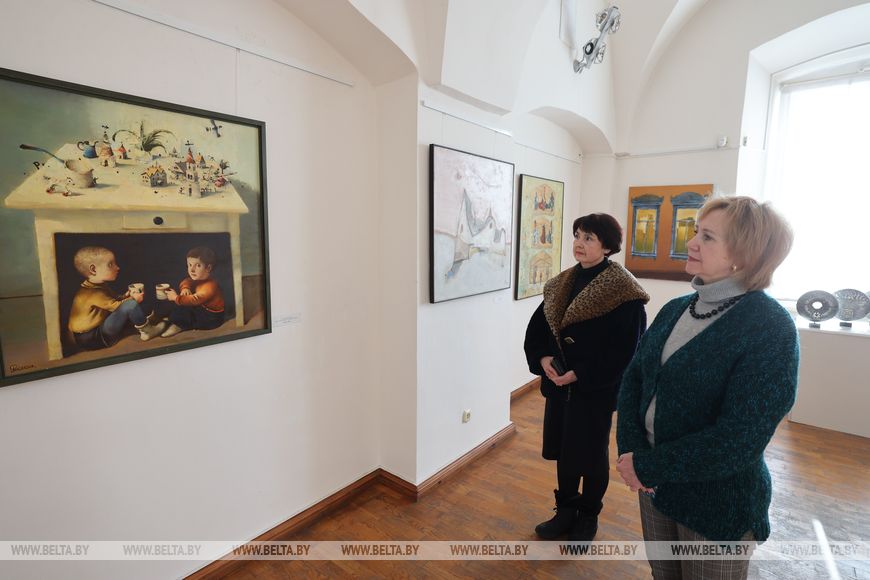
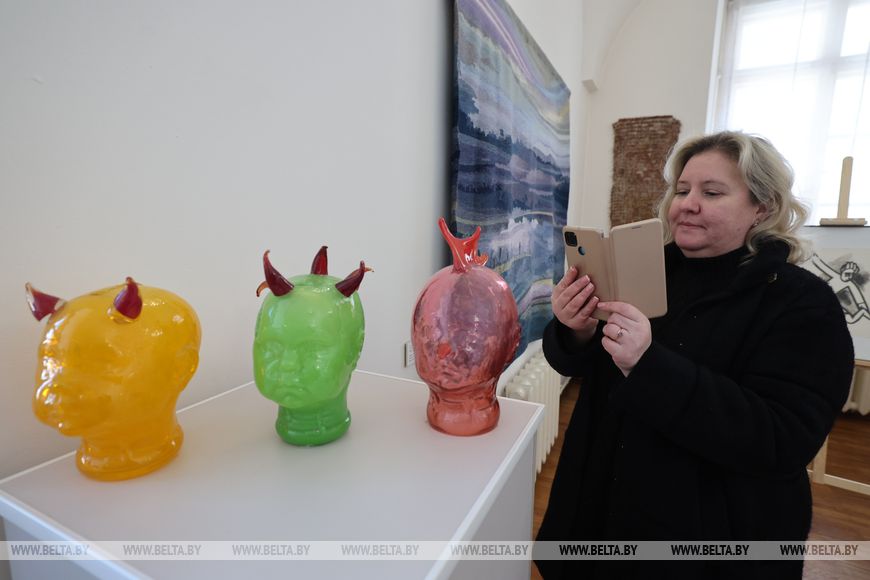
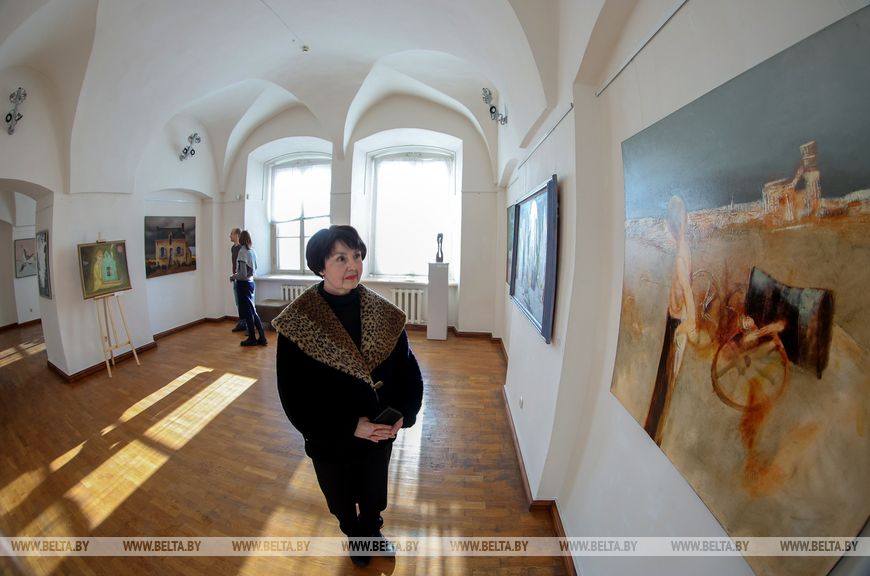 To mark the gallery’s 45th anniversary, an exhibition of contemporary artists has been mounted. “The First Quarter” exposition presents a collection of 50 works created between 2000 and 2025, i.e. the first quarter of the 21st century.
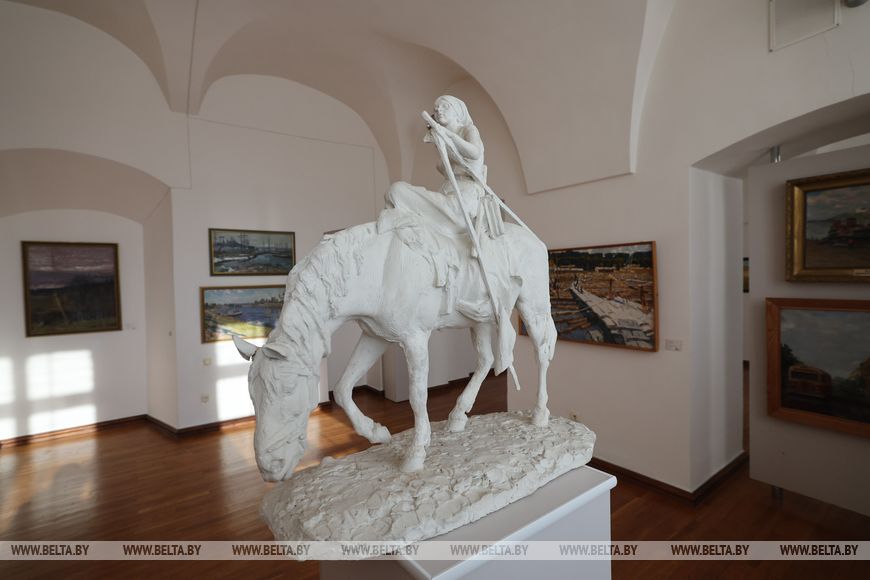
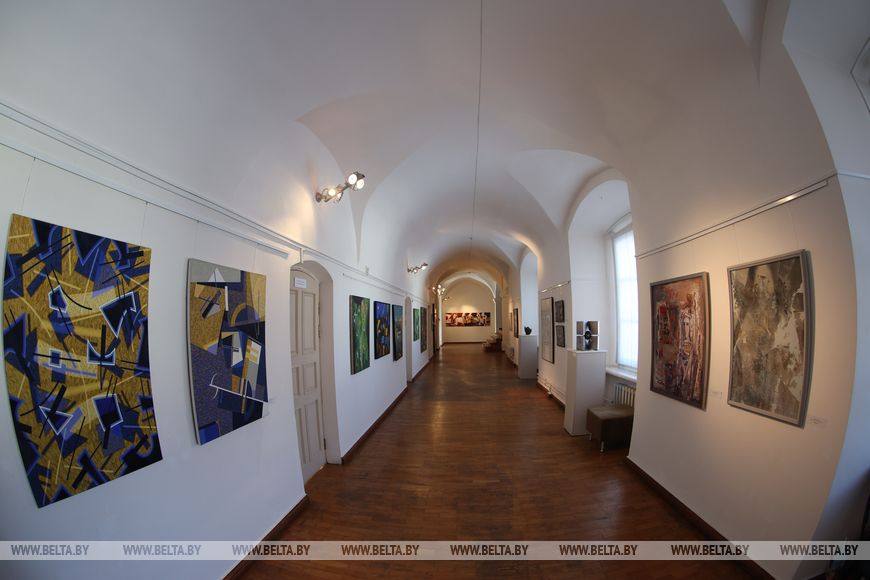 The gallery’s second floor showcases an exhibition of paintings by 20th-century Belarusian artists. The collection spans Realism, Socialist Realism, the so-called severe style of the 1950s and 1960s, as well as individual collections of works distinguished by their own unique techniques.
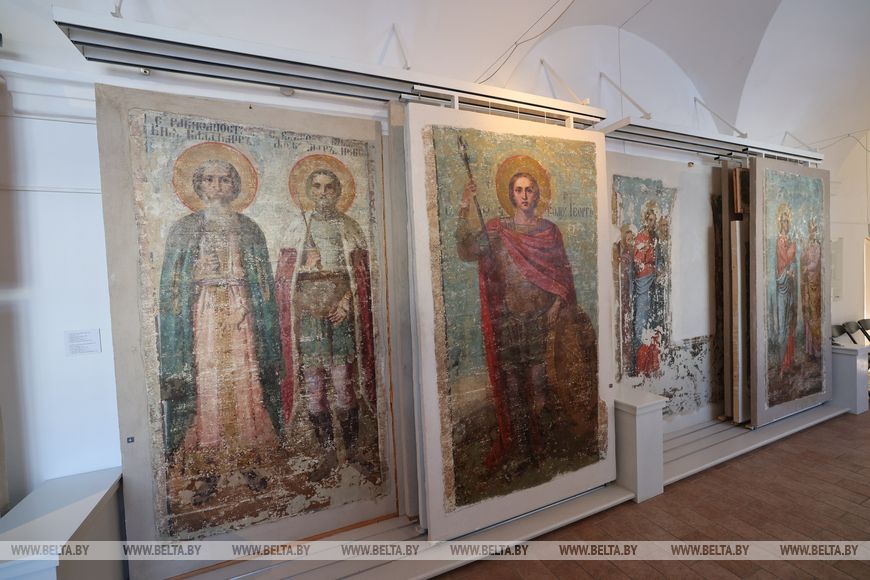
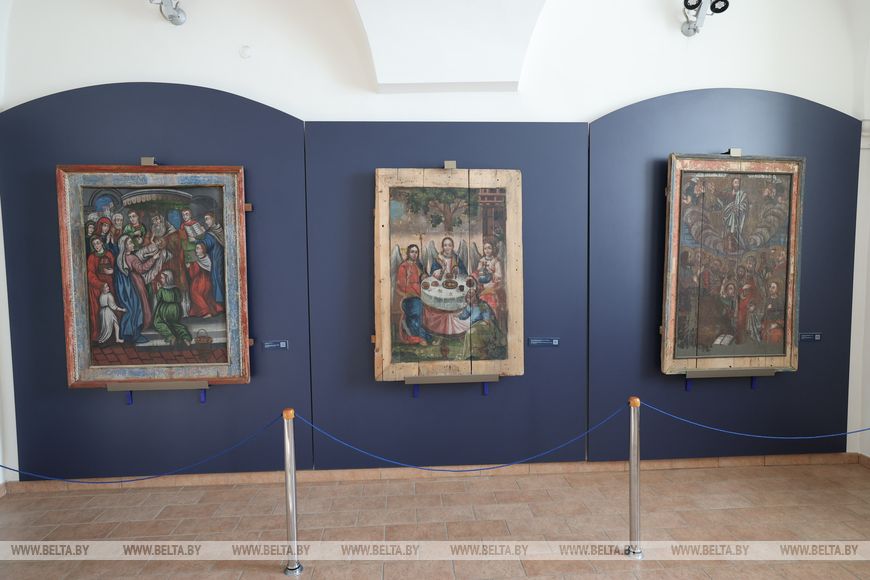 The first floor features specimens of the 19th-century ancient iconography and murals uncovered during the restoration of the Transfiguration Church on the grounds of the St. Euphrosyne Convent.
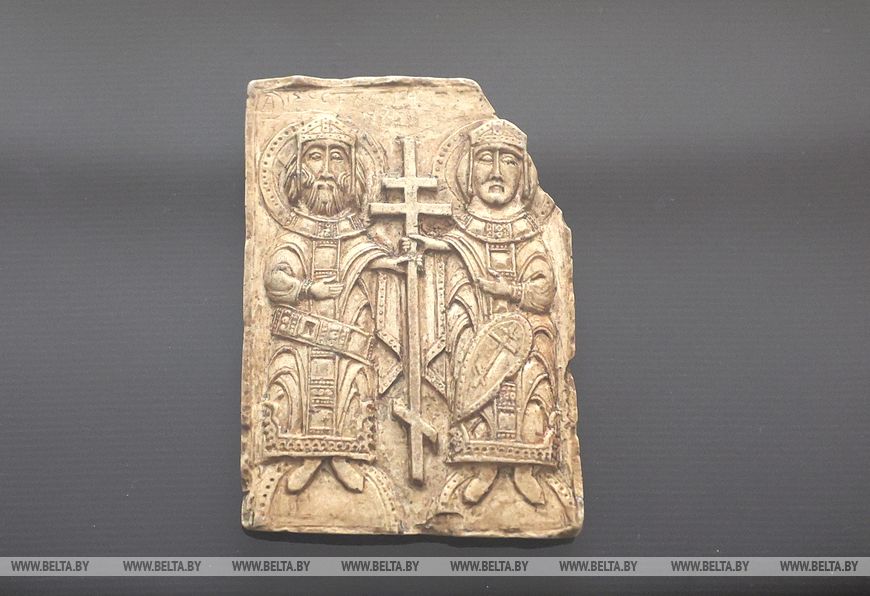
 The oldest artifact and one of the gallery’s most valuable archaeological items is the icon “Saints Constantine and Helena.” It dates back to the 12th century. The stone icon is made of soapstone and was discovered in 1967 during excavations at the St. Sophia Cathedral in Polotsk. The icon depicts Saint Constantine the Great, Equal-to-the-Apostles, the Roman Emperor during whose reign Christianity became the dominant religion in the empire, and his mother, Helena, canonized for her work spreading Christianity. During his lifetime, the emperor venerated the Holy Cross and provided funds for his mother’s pilgrimage to Jerusalem. Helena, along with Macarius, the Patriarch of Jerusalem, recovered the True Cross from Mount Golgotha, and thus, in 326, the Christian world acquired this relic.
 Another example of ancient church art is a 12th-century engolpion cross, intended to hold the relics of saints. It was also found during archaeological excavations in Polotsk.
The icon collection includes items donated by residents of Polotsk and Polotsk District. The best-preserved icons are those cast in copper, typically used in Old Believer communities, where they sought to create images from materials that could travel well and were relatively lightweight. According to their belief, anything that had been treated with fire was considered consecrated. In the gallery, one can also find examples of icons with wooden covers, which could easily be mistaken for metal ones due to being overlaid with gold leaf. This openwork carving, characteristic of Belarusian craftsmen, has brought them fame beyond the country’s borders. In addition, works by local amateur masters are also on display here.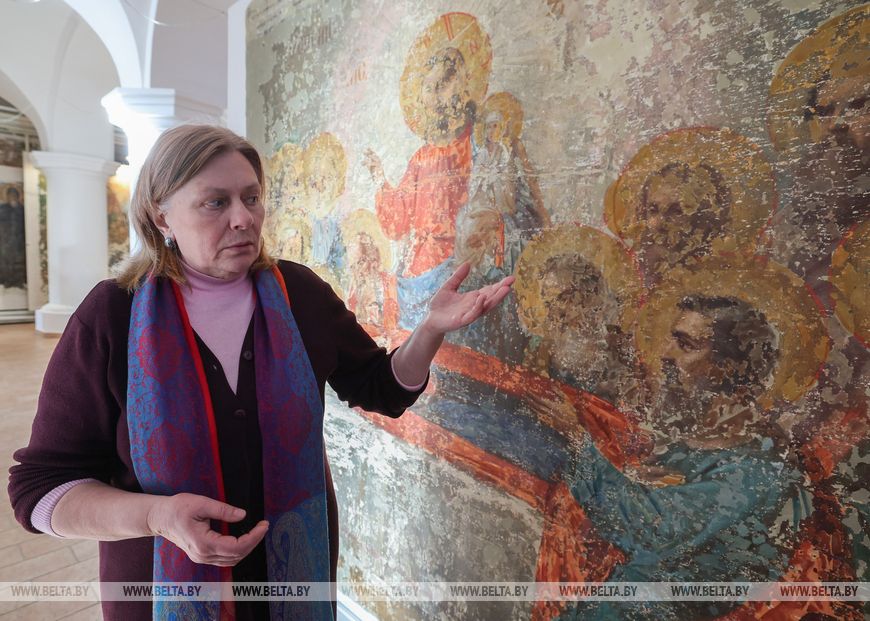
painting. “It was removed during the restoration of the Transfiguration
Church, a 12th-century structure. Initially, the church walls were
completely covered with frescoes, applied using water-based paints. They
had to be applied to wet plaster so the paint would be fully absorbed.
Over time, these frescoes darkened, and in the 19th century, it was
decided to repaint them, covering them with new paintings. Since it was
impossible to replicate the frescoes in their original form, they were
repainted using oil paint, which creates a kind of film. In 1885, the
first layer of painting was done, meaning all the 12th-century
monumental art was covered, and then, 50 years later, a second stage of
restoration took place,” the gallery staff explained.
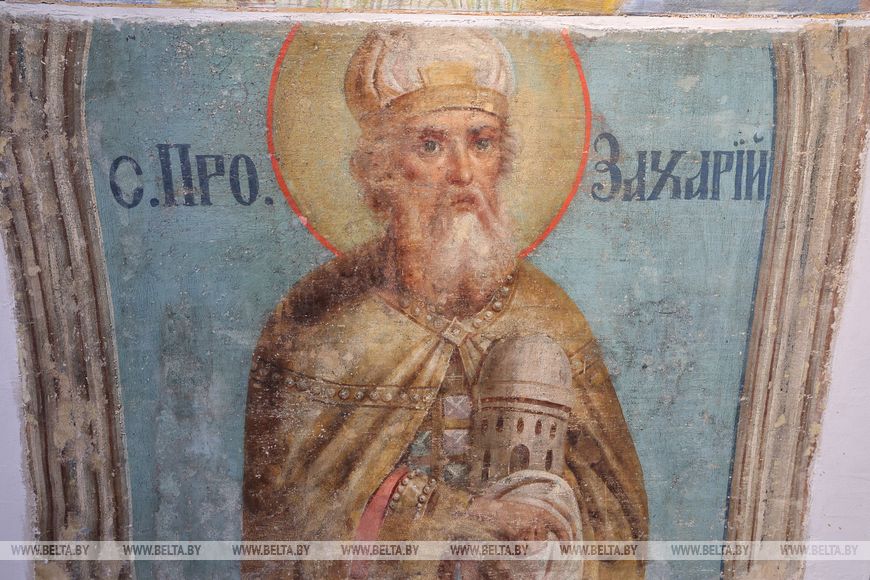
restoration work began in 1992, the question arose of how to preserve
the impressive 19th-century wall paintings. For this project, Belarusian
specialists, together with a team of Russian restorers, developed a
special technique that made it possible to detach the oil paint and
transfer it onto a prepared backing. Today, the fruits of this
meticulous, 20-year endeavor are on display at the Art Gallery, offering
visitors a chance to appreciate the truly monumental work done by these
masters of their craft.
“There is no other exhibition like this anywhere in Belarus,” the cultural workers assured. It is for its uniqueness that visitors, both residents and visitors of Polotsk, value it most of all.
Alesya Pushnyakova,
photos by Aleksandr Khitrov,
BelTA.