

[ad_1]
By ZIA PAO-ZIEGLER May 19th, 2026
No one Knows but the Sky is a show about transience, but Youssef Nabil approaches mortality without dread. As you enter, The Room (2025) sets the stage: Nabil narrates over footage of a flock, “those birds, all in perfect harmony… are they better synchronized souls than us humans?” For Nabil, death is a change in dimensions as we “come in one door and leave another.”
The bifurcation in No one Knows but the Sky (2019) cleaves the central path of sunlight reflecting off the azure waves. The birds are indeed “better synchronized souls than us humans”, if the disjuncture bisecting the center of the print is read as a transition into death.
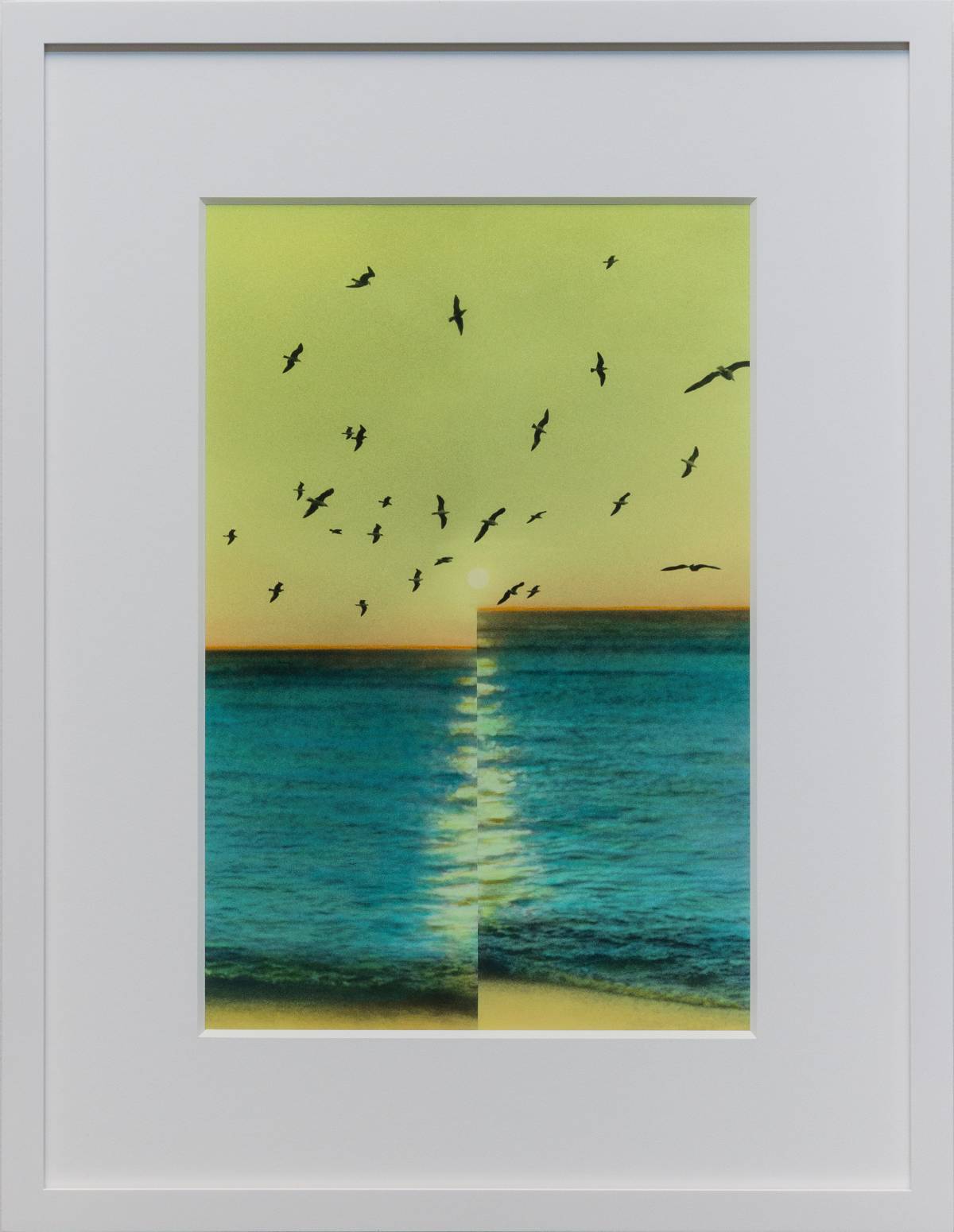
Youssef Nabil, No one Knows but the sky, 2019. Courtesy of the artist and Mariane Ibrahim
In Memory of a Happy Place (2021), Nabil’s younger self is kaleidoscoped across an axial divide, the same threshold. His transparent form hovers atop another beach horizon, the fronds of a staggered palm brushing across his cheek. The young face fades, phantasmic, into the memory it depicts.
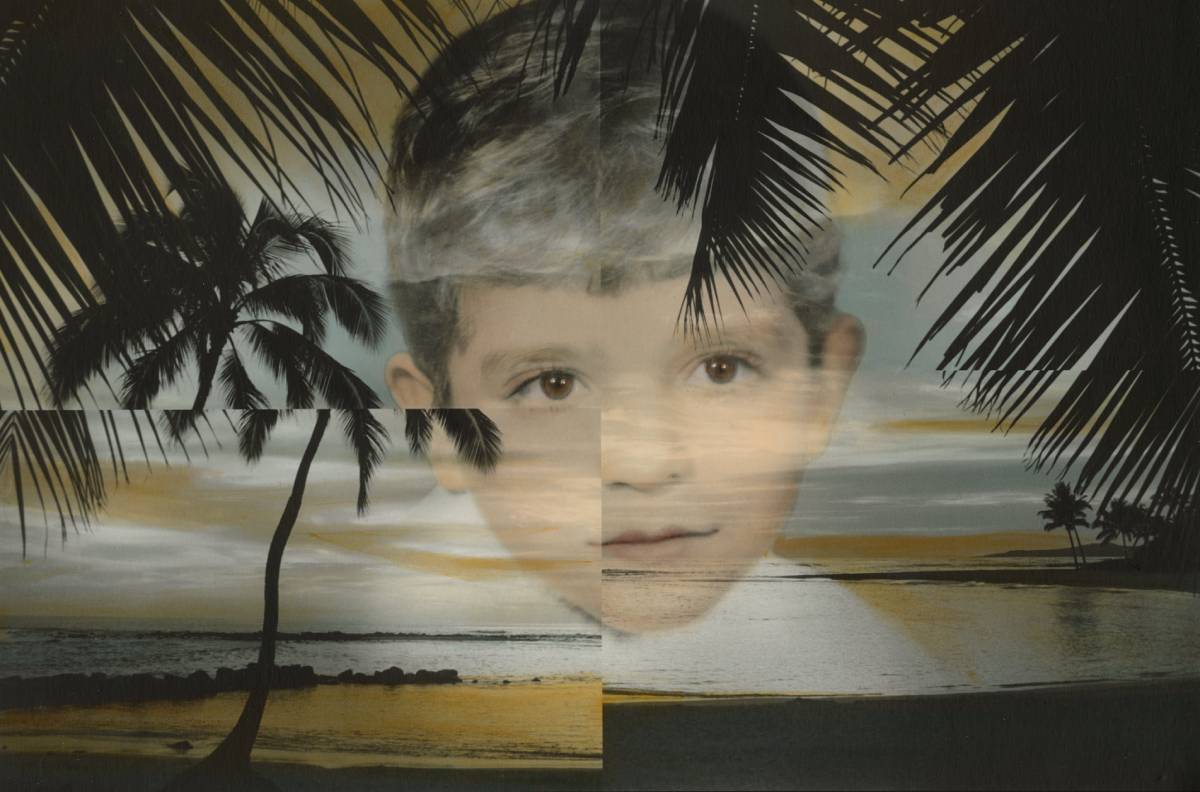
Youssef Nabil, Memory of a Happy Place, 2021. Courtesy of the artist and Mariane Ibrahim
Spread across the walls, a series of self-portraits each named for a destination makes clear that Cairo, though the imaginative origin of Nabil’s practice, is not the singular focus. As Nabil narrates in The Room (2025), “you have been a soul in that body, trying to find home in life.” His illuminated silhouette in Cinema, self-portrait, Florence (2006), gives way to Self-portrait with Roots, Los Angeles (2008), where the base of a gnarled trunk dominates the frame, Nabil nestled in the roots above – minor vignettes of what memories persist.
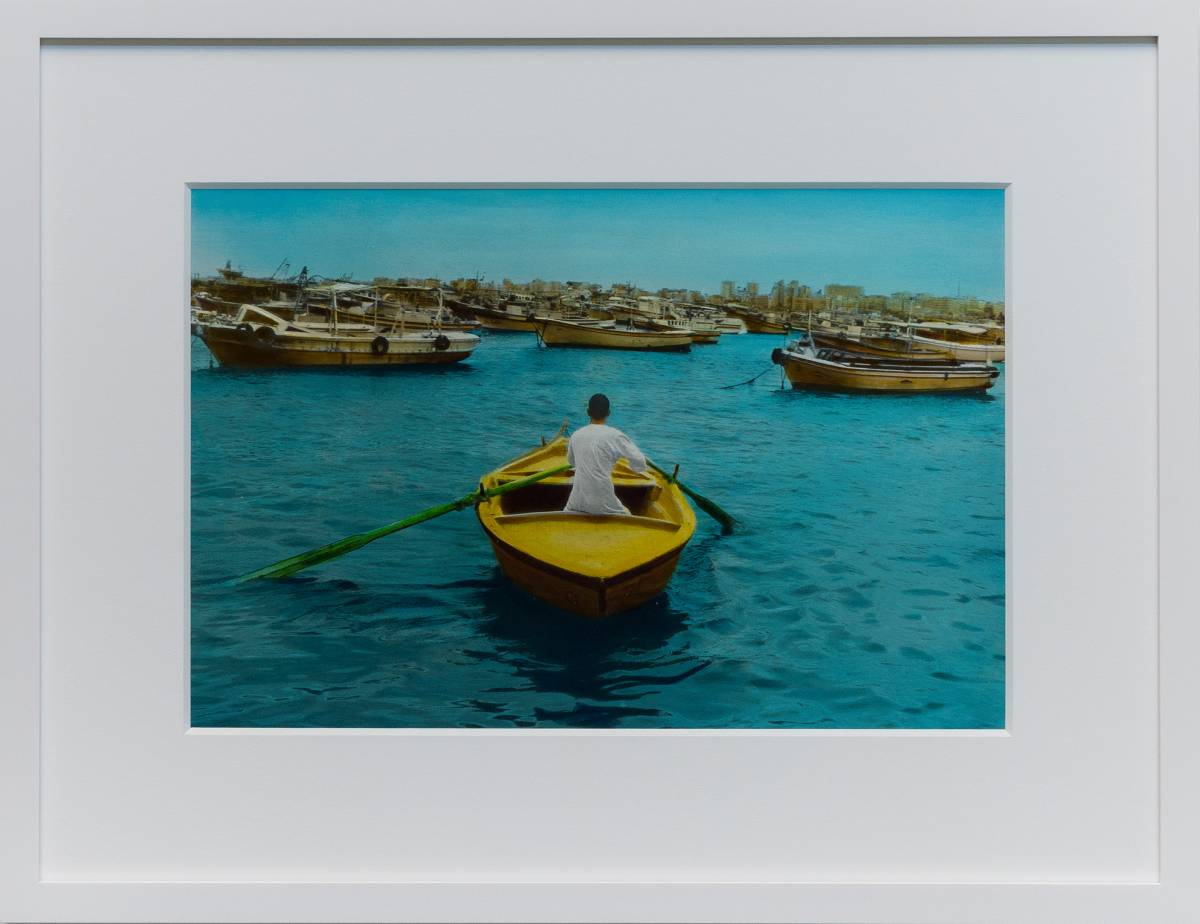
Youssef Nabil, Say Goodbye, self-portrait, Alexandria, 2009. Courtesy of the artist and Mariane Ibrahim
The hand-colored prints are speaking back, not to the Cairo that once was, but to the soul of Nabil himself. In Say Goodbye, self portrait, Alexandria (2009), a younger Nabil clutches the oars which drive him further from the shores of Alexandria, a city whose history dwarfs Cairo. Here, the scenes are not contained to Nabil’s lifespan or birthplace, but trace the broader lineage of his identity. In You Will Forget (2021), that image of himself begins to fade entirely, ceding his form to the rising sun above the horizon.
Uniformly framed and hung at eye level, the prints advance like slides through a projector – looking back in time, forward to where you have yet to go. Hand-coloring each silver gelatin print in the tradition of early technicolor film, Nabil employs a dreamlike palette, saturated with azure, dusky golden light, reds and hazy whites to animate the past. 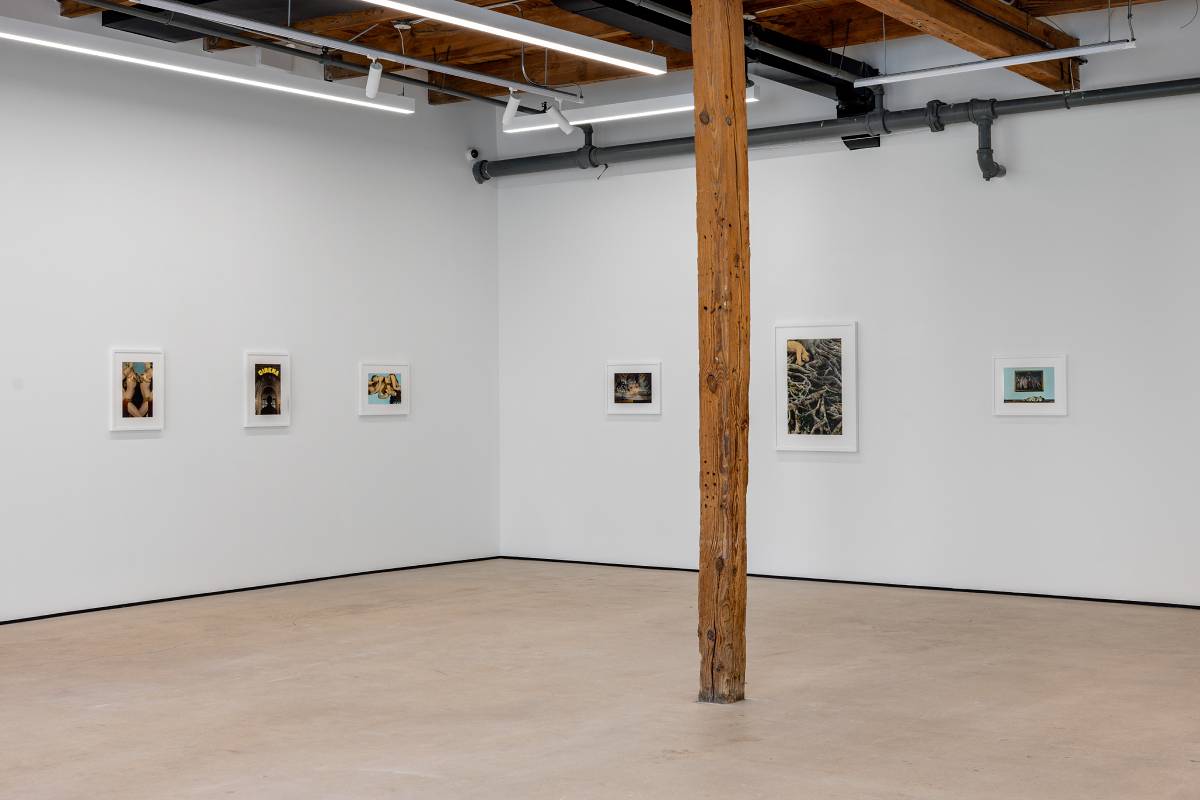
Youssef Nabil, Say Goodbye, self-portrait, Alexandria, 2009. Courtesy of the artist and Mariane Ibrahim
Taken together, the self-directed narration in The Room (2025), and the self-portrait titling converge as a meditation on afterlives: of Nabil’s memories, Cairo’s cinema, Alexandria’s layered past. No one Knows but the Sky is his fabulation of what bridges his soul across life and into death. Cairo’s cinema is its origin, the hand-colored print its medium, but stroke by stroke, Nabil narrates the dreams and visions that follow him, eternally.
Youssef Nabil
No one Knows but the Sky
April 8 – May 23, 2026
[ad_2]
Source link