

[ad_1]
Throughout history, political artworks have served as some of the most piercing commentaries on power and ideology. Unlike pieces that merely gesture toward social themes, these works confront political realities head-on, challenging governments, exposing propaganda, and criticizing the decisions that shape national and global events. From the charged murals of the early 20th century to the provocative interventions of contemporary artists, these creations have not only documented political unrest but often sparked it. Here are ten defining political artworks that reshaped the cultural understanding of what art can do.
1. Kathe Kollwitz’s Political Artwork — The Survivors (1923)
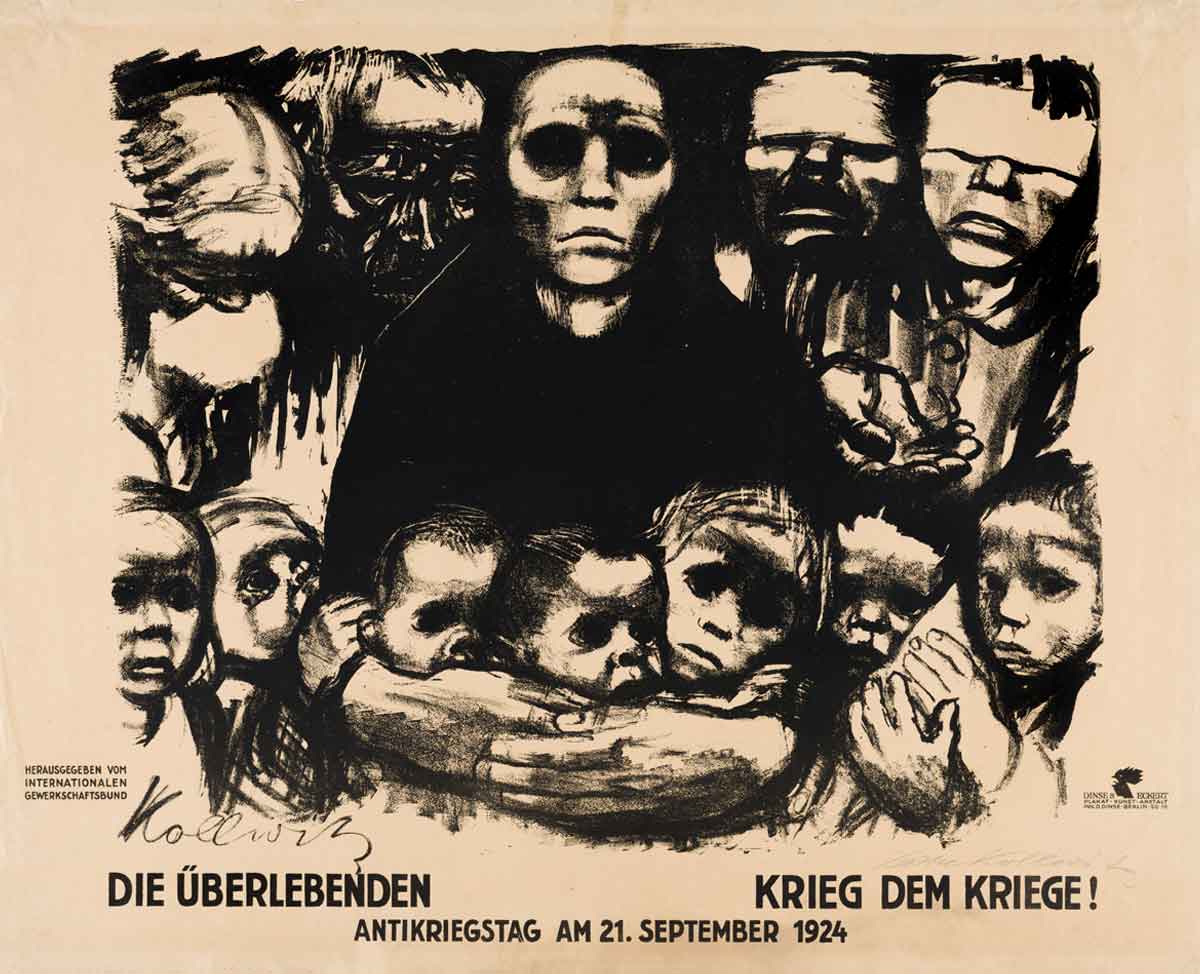
One of the most powerful political artworks condemning World War I is Kathe Kollwitz’s The Survivors. It is a dark woodcut depicting women and children grieving, all pressed together against a dark background. Their hollow eyes and distressed facial expressions suggest their collective anguish.
The Survivors confronted a different aspect of World War I, different from the “noble sacrifice” narrative. Rather than honoring military glory or patriotic duty, the artwork exposed what that narrative left out: the civilians who endured loss, poverty, and instability as a direct result of government action. Kollwitz, who lost her own son in the war, turned personal grief into a public statement about the political structures that enable conflict.
Kollwitz’s piece was shocking because it confronted the official narratives that sought to restore national pride. Germany was defeated and deeply polarized. So, when a lithograph made the political classes see ordinary people’s suffering, it was considered unpatriotic and destabilizing. The fact that the piece was raw and made by a well-respected female artist of the time made it even more influential and controversial.
2. Diego Rivera — Man at the Crossroads (1933)
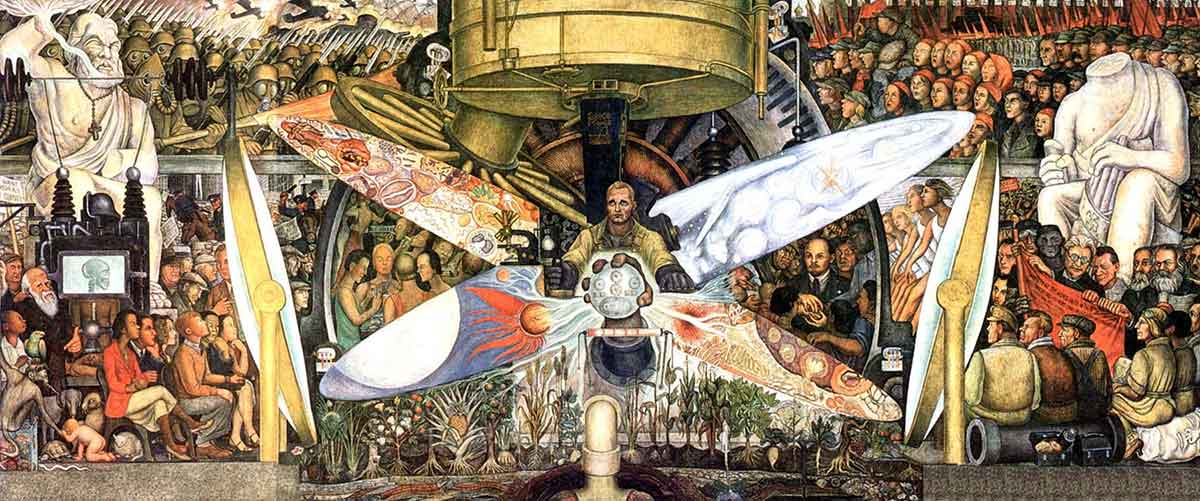
Diego Rivera created this monumental mural for Rockefeller Center in New York in 1933, celebrating human progress. However, his take on the subject was a politically charged version of the modern world. He placed science, industry, and society at a crossroads between capitalism and socialism. At the center of the mural, there is a working man who controls the machinery. He is surrounded by technological achievement, social struggle, and political figures, with the most apparent being Vladimir Lenin. Depicting Lenin, Rivera included strong references to Marxist ideology and showed his support for the socialist ideas.
The political stance of this mural piece was quite clear. It confronted issues of class, labor, and financial power. Rivera was not afraid to step up as an artist and challenge the capitalist patron who commissioned the work. He placed ordinary workers and revolutionary figures alongside symbols of elitism and power, commenting on their juxtaposition and on how social inequality is formed.
It was one of the most provocative political artworks of the time, as Nelson Rockefeller, the commissioner, ordered its destruction just a few months after its reveal. He said that the depiction of Lenin was unacceptable. The destruction was an international scandal, as it became a breaking point between artistic freedom and governmental and corporate authority. The artist recreated it later in Mexico City, under the title Man, Controller of the Universe.
3. Martha Rosler — House Beautiful: Bringing the War Home (1967–72)
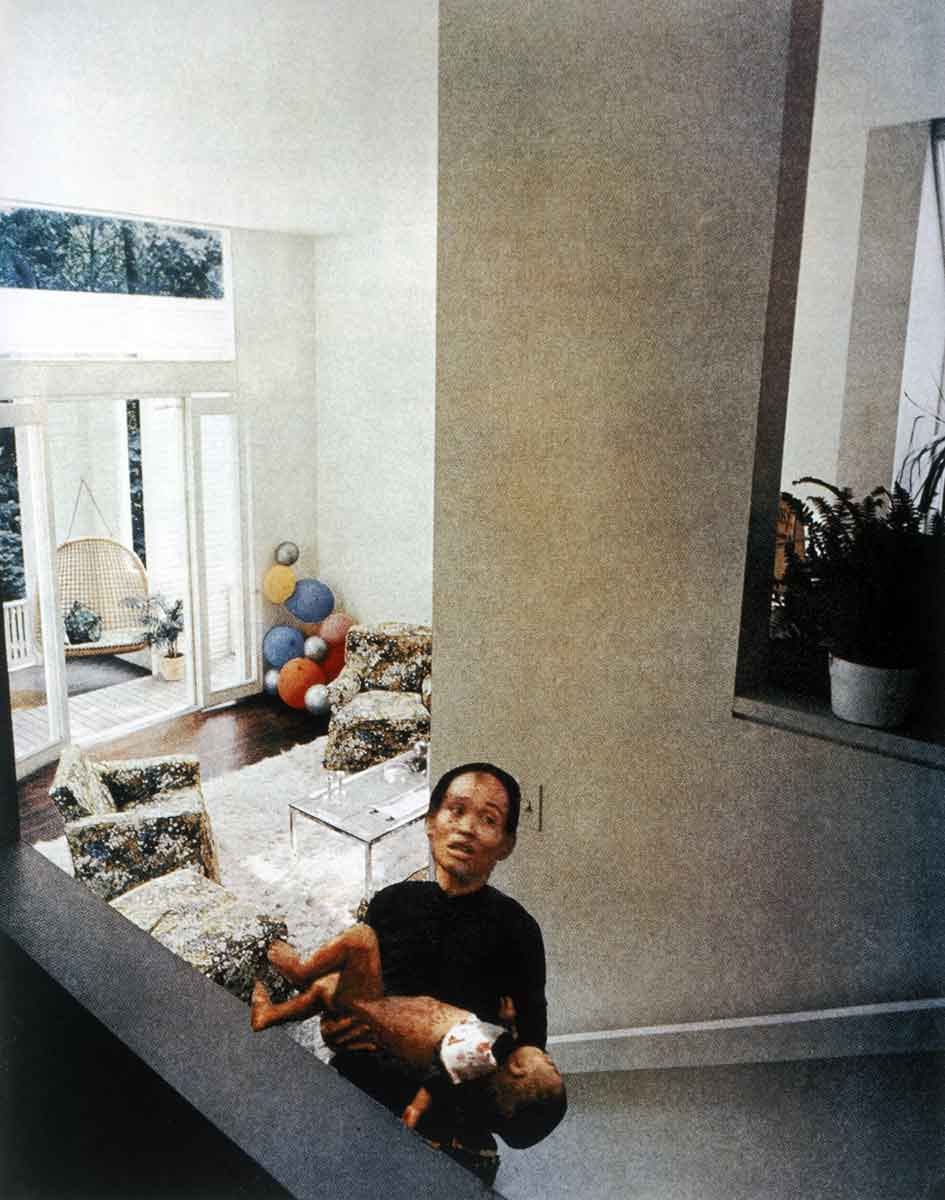
House Beautiful: Bringing the War Home is a striking photomontage series by Martha Rosler. The photos are a blend of modern house interiors from glossy magazines and traumatic stills from the Vietnam War. The artist’s juxtaposition is nerve-racking; beautiful interiors with fancy furniture perfectly arranged house scenes of bombings, soldiers, and civilian casualties. This way, she forced the viewers to face the contrast between American comfort, the commodities of their house, and the brutal realities of the US military intervention in Vietnam. Her choice of media was powerful, as she made the war literally intrude on the safe space of home.
The series is an ideal example of political artworks. It directly critiqued the American government. Additionally, it called upon society’s lack of concern and questioned the way domestic consumption could conceal political atrocities. By bringing images of war into the familiar context of home, Rosler exposed the implications of citizens and institutions in supporting political agendas.
The House Beautiful series really shocked the audience when it first appeared due to its powerful imagery and confrontational approach. It achieved its goal because it did not stay in the gallery spaces but circulated in publications such as Life Magazine and various exhibitions, reaching a wide range of the public and making the political critique unavoidable. Thus, Rosler turned photography into an artistic tool of political accountability.
4. Anita Steckel — Giant Woman (1970–72)
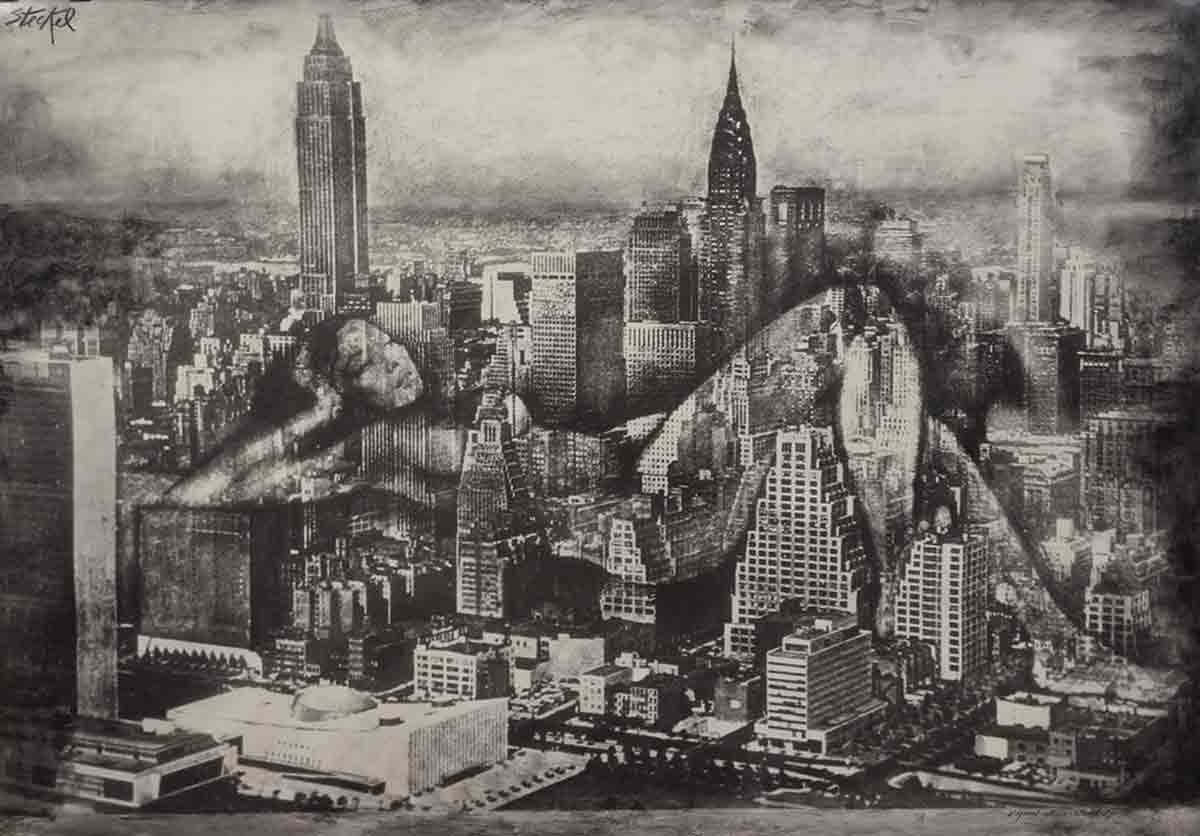
The Giant Woman series is a collection of photomontages by Anita Steckel. It consists of bold works that blend erotic imagery with symbols of political power. Steckel placed giant female figures, often partially or completely nude, in the middle of New York skyscrapers, military equipment, or even between US presidents, such as Richard Nixon, doubting the domination of male authority in public life.
This series was both politically and socially charged. Steckel targeted the U.S. government, its leaders, and their moral hypocrisy. Moreover, she commented on the public morals and the realities of patriarchy of the time. Her choice to place icons of national authority into playful and sometimes even defenseless situations revealed the artist’s opinion about the fragility of political power. At a time when political scandals and anti-war movements were reshaping the national conversation, Steckel’s collages added a feminist critique that questioned who occupied public space and commanded authority.
The Giant Woman caused shock and criticism not only for its nudity, but also for its provocative mockery of presidents. A few art spaces tried to censor the photomontages and remove them. However, that gave Steckel the push to create the Fight Censorship Group in an effort to defend artistic freedom. This series, and Steckel’s work in general, remain influential political artworks because they reveal how threatening it is to combine sexuality, feminism, and political critique in such a direct way.
5. Keith Haring — Crack Is Wack (1986)
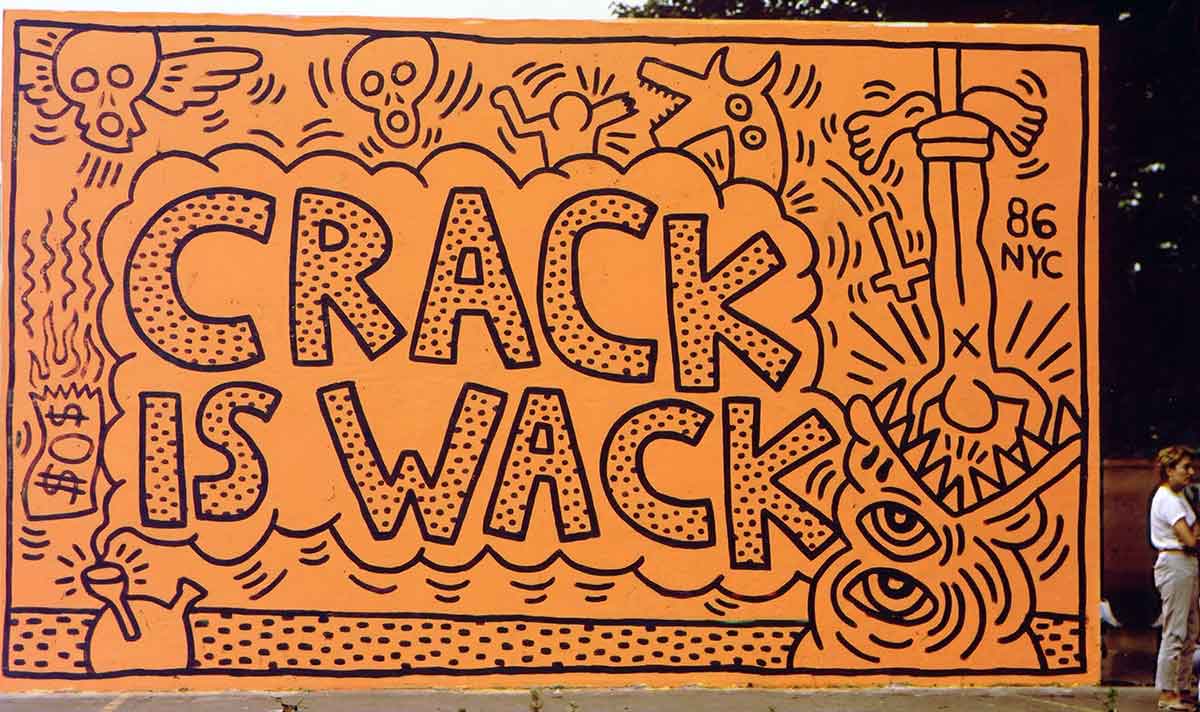
Keith Haring’s Crack is Wack (1986) is one of the most iconic public murals of the 1980s. The artist painted it on a handball court in East Harlem at the height of the crack cocaine epidemic. Using his characteristic bold lines and vibrating figures, he created a bright, cartoonish composition that contrasted sharply with the deadly seriousness of the crisis. The mural featured frantic human forms, skulls, and symbols of chaos, visually conveying the destructive spread of crack across New York City.
Although it is often seen as a social comment, Crack is Wack is mostly a political critique. At the time, the U.S. government’s “War on Drugs” targeted unjustly and criminalized communities of color. Harring’s mural was a direct critique of these offenses, addressing the human cost of the crisis. He deliberately placed the artwork in a public space, where art institutions had no control. He also painted it illegally, further highlighting the mural’s message.
Crack is Wack attacked government drug policies, shocking everyone with its boldness. This resulted in Haring’s arrest and the authorities’ attempts to remove the mural. However, these events only made the piece more relevant. Today, Crack is Wack remains one of the most recognizable and everlasting political artworks.
6. Barbara Kruger — Untitled (Your Body is a Battleground) (1989)
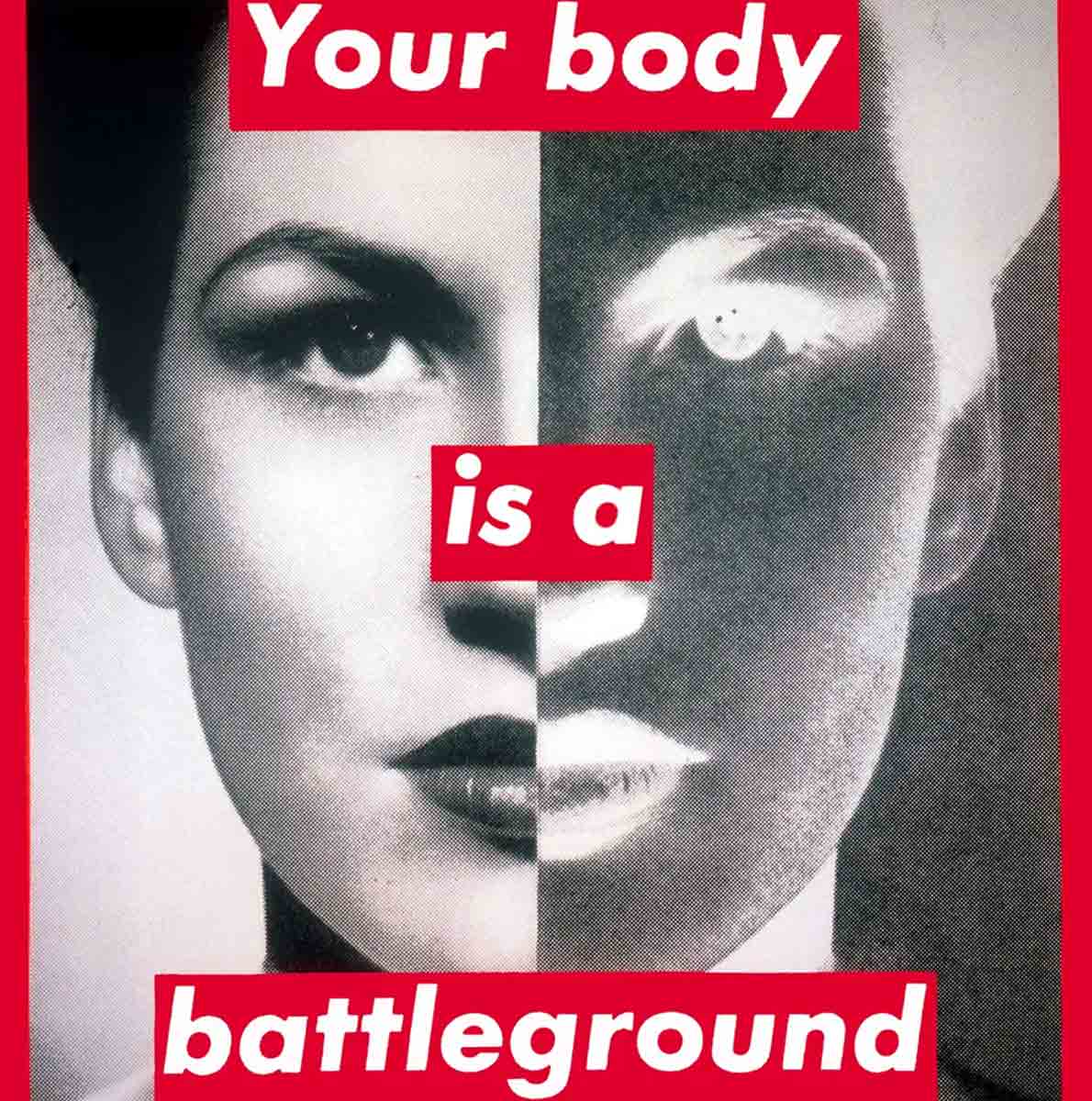
Untitled (Your Body is a Battleground) by Barbara Kruger is another feminist political artwork. It directly confronts the politics around women’s bodies and reproductive rights. The piece is a photographic silkscreen, featuring a black-and-white female face, divided in the middle, overlaid with red and white text. The text itself is a statement on individual autonomy and political struggle.
This work targets state authority and public policy rather than purely social or cultural norms. Kruger created it for a pro-choice demonstration in Washington, D.C., during a period of intense political debate over abortion rights in the United States. By using graphic design techniques reminiscent of advertising—large-scale text, high-contrast imagery, and a confrontational layout—Kruger turned the language and visual style of mass media against itself, exposing how political messages are constructed and disseminated.
Untitled (Your Body is a Battleground) shocked due to its directness and public visibility. Kruger was another artist who used photography for political commentary, combining aesthetic values with urgent activism. She encouraged the supporters of reproductive rights and, at the same time, provoked strong reactions from the opposers. Its message remains relevant today, as the discourse about reproductive rights is still ongoing.
7. Dmitri Vrubel — My God, Help Me Survive This Deadly Love (1990)
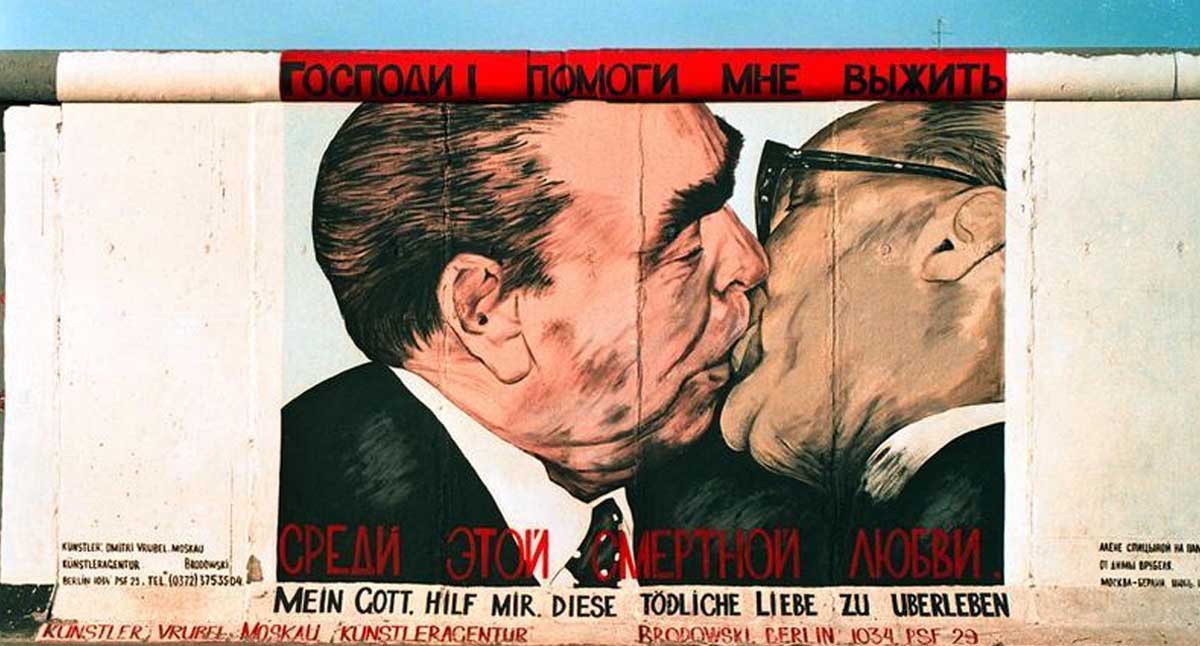
The iconic mural was painted on the Berlin Wall by Dmitri Vrubel, a Russian painter. It depicts Leonid Brezhnev, a Soviet leader, and Erich Honecker, an East German leader, kissing. The comic style of the mural magnified the intimacy of the kiss and placed it within the broader context of Cold War politics.
The mural is an emblematic example of political artworks because it directly confronted the absurdities of totalitarian regimes. The title was actually taken from another graffiti on the Wall. It amplified the political message of the mural by making the kiss a “deadly love” that oppressed the ordinary citizens. In this way, the work became a public indictment of government collusion, ideological control, and the state’s restrictions on personal freedom.
The mural stunned people with its satire. Vrubel painted it on the Berlin Wall, one of the Cold War’s most iconic monuments. The combination of the subject and the mural’s placement was enough to spark political discourse and even disturb. Over the years, it became one of the most recognizable political artworks of the late 20th century. It demonstrated how art can memorialize political turmoil in a single, unforgettable image.
8. Ai Weiwei — Dropping a Han Dynasty Urn (1995)
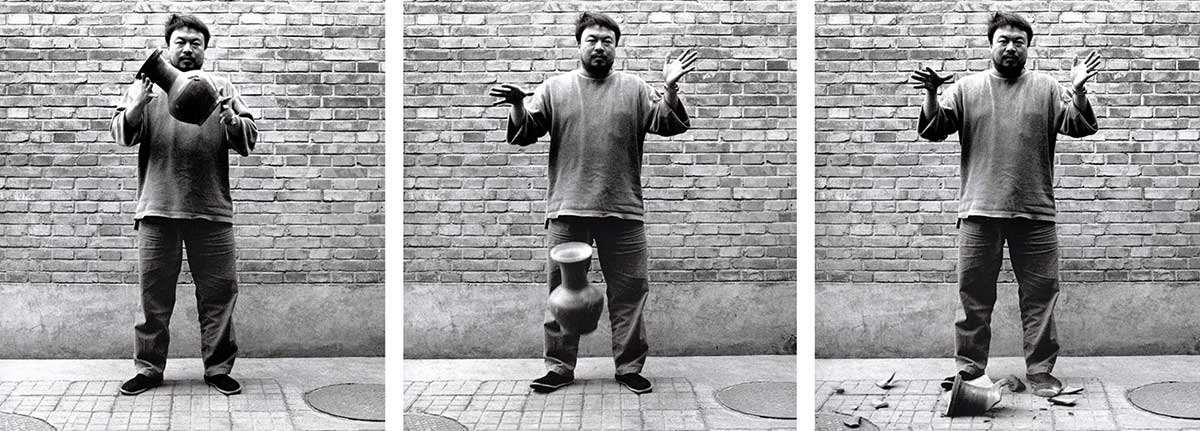
Dropping a Han Dynasty Urn is a provocative photographic triptych documenting the artist intentionally dropping a 2,000-year-old Chinese urn and letting it shatter into pieces. The sequence transforms a moment of destruction into a carefully staged act of artistic expression. On the surface, the work appears shocking for its apparent desecration of cultural heritage. However, it is mostly a deliberate critique of the state’s control over culture.
When Weiwei destroyed a symbol of imperial history, he basically called out the government for deciding how history was presented. It was also a comment on China’s political and social transformation, reflecting the pressures around tradition, nationalism, and overall modernization. Therefore, this photographed performance became a reflection on political power and censorship. Naturally, Dropping a Han Dynasty Urn caused many reactions. Many people thought it was a blasphemous act. However, the artist’s political intentions were much stronger, criticizing the relationship between history and culture, art and politics.
9. Banksy — Girl Frisking Soldier (2007)
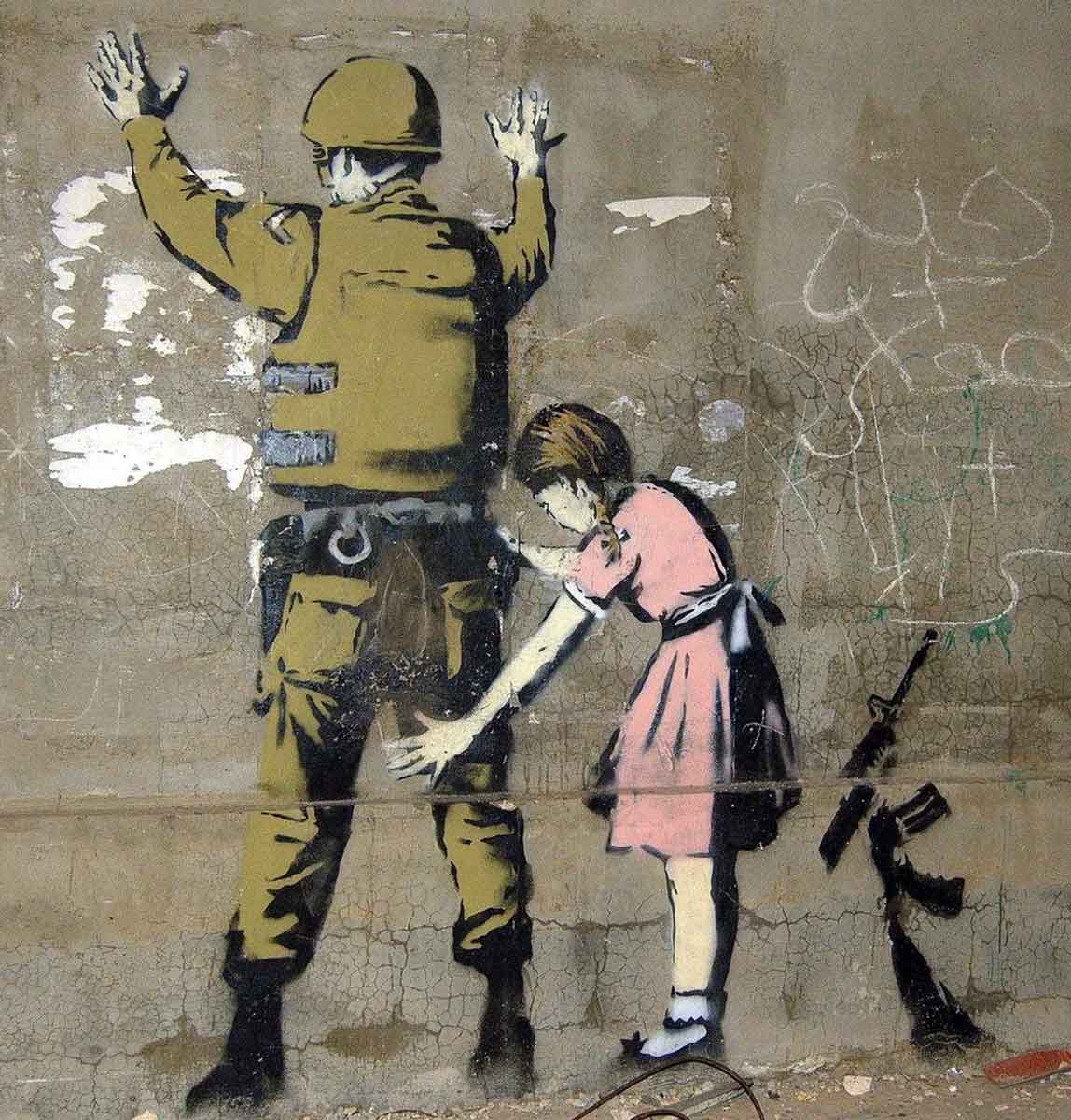
Girl Frisking Soldier is a powerful stencil mural by Banksy, painted in the West Bank, Palestine. It shows a little girl frisking a fully armed Israeli soldier, reversing the traditional roles of control and vulnerability. The painting’s message is immediately recognizable and impactful. Banksy’s creation is quintessentially political and relevant today. It directly critiques military power and the politics of occupation. By having a child perform an act of control, the artist exposed the fragile nature of power structures: who holds the authority, how, and with what outcome on ordinary people. The mural’s simplicity only underscores its message.
Banksy’s murals are always shocking for their audacity. Moreover, his choice of public placement makes it more than art; it becomes activism. The artist blends humor and irony with sharp critique, but always in a visually understandable way. So, the appeal and what he wants to convey are crystal clear. Girl Frisking Soldier is another impressive example of public art’s power in engaging directly with political and social issues.
10. Georgia Lale Political Artwork — Neighbourhood Guilt (2021)
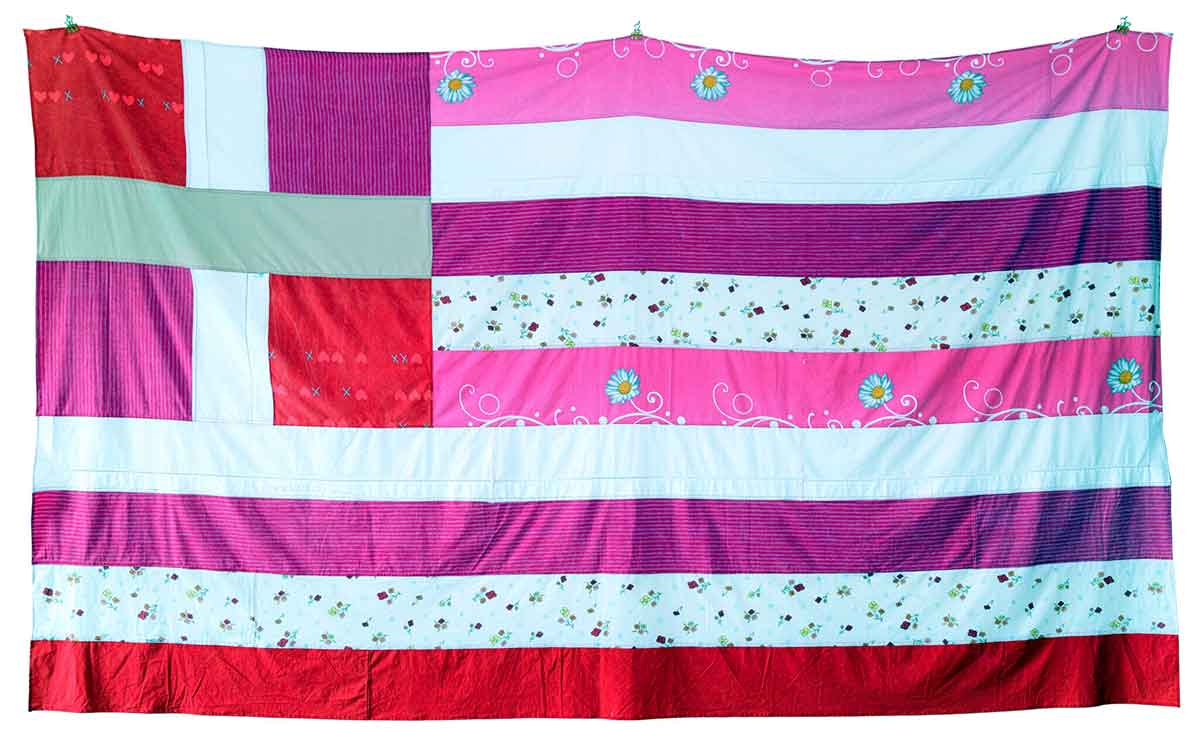
Georgia Lale’s Neighbourhood Guilt, widely known as the “pink flag,” is one of the most politically charged artworks to emerge from Greece in recent years. The piece reinterpreted the Greek national flag in soft pink and white, but its material gave it a devastating weight: it is sewn from bedsheets donated by Greek women who have experienced domestic violence. Lale conceived the artwork after the 2021 femicide of Caroline Crouch, inviting women to send her their sheets as an intimate act of testimony. As the artist has explained, most femicides occur in the home, and it is bedsheets that “soak up their blood.”
When the flag was first displayed at the Greek Consulate in New York in December 2023, it sparked a political uproar. Specifically, the conservative and far-right politicians denounced it as disrespectful to the national symbol. The outcry was so big that the Greek Foreign Minister ordered its removal. Ever since, Neighborhood Guilt has become a symbol of resistance and resilience. In 2024 and 2025, it was projected onto the Athens City Hall on International Women’s Day. It has also been exhibited in public displays, making it a landmark for awareness and accountability.
[ad_2]
Source link